
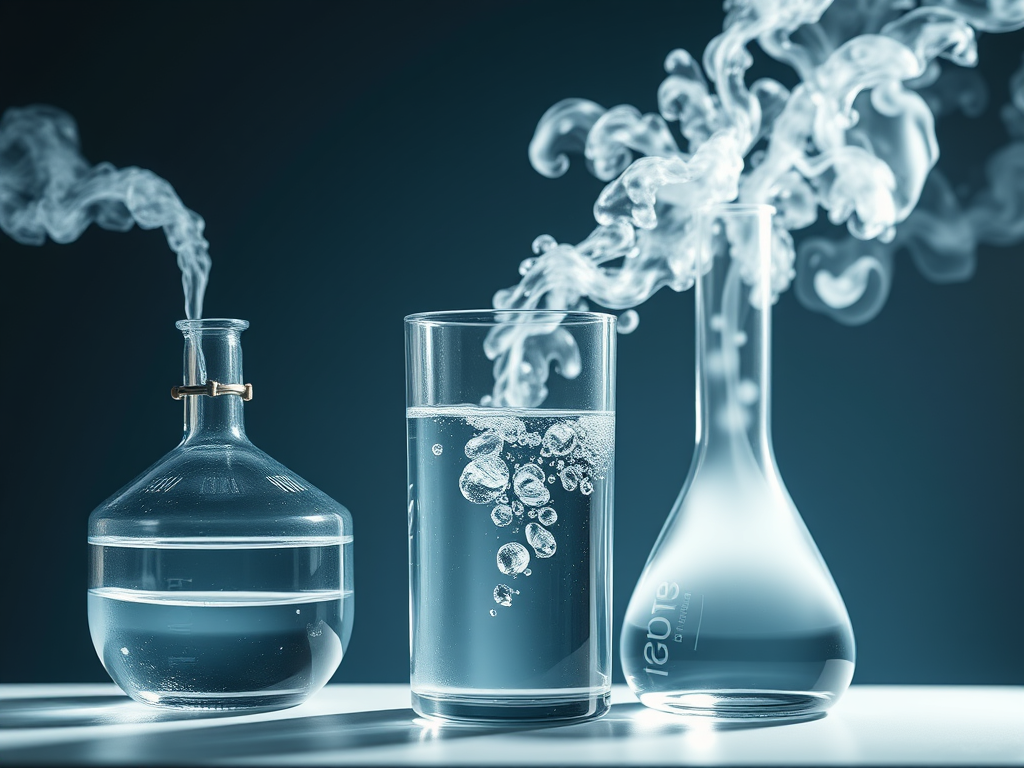
What is distilled water
Distilled water is water that has been vaporized and recondensed to remove dissolved minerals, many metals, and microbiological contaminants. The result is a clean, neutral base water with very low total dissolved solids compared to untreated tap or typical bottled water. Public health agencies recognize distillation as an effective method for removing inorganic substances and many other impurities.
How the distillation process works
- Heat and vaporization. Source water is heated to produce steam. Nonvolatile solutes like calcium, magnesium, and most heavy metals do not vaporize with the steam and are left behind in the boiling chamber.
- Gas handling. Good distillers vent early vapors and may include a small activated carbon stage to capture volatile compounds that can travel with steam. This helps remove trace gases and improves taste.
- Condensation and collection. The steam travels across a cooled surface and condenses back into liquid water, now separated from the original dissolved minerals and many contaminants.
Why this matters: Distillation separates by phase change rather than by pore size or ion exchange. That makes it robust for a wide range of dissolved solids and microbes without frequent membrane or resin replacements.
Why distillation delivers exceptional purity
Minerals and aesthetic contaminants that drive hardness, scale, and off tastes are among the easiest wins for distillation. EPA’s guidance on secondary contaminants notes that nonconventional treatments like distillation are effective at reducing total dissolved solids and other inorganics that affect taste and scaling.
Boiling kills germs but leaves minerals behind. Distillation goes a step further by physically separating the steam from nonvolatile impurities, then condensing it back to liquid. Public health resources consistently describe boiling as reliable disinfection and distillation as an effective treatment when purity beyond disinfection is desired.
Distilled vs RO, deionized, boiled, and spring
| Water Type | How It Works | What It Removes Best | What It Leaves Behind | Typical Use Cases |
|---|---|---|---|---|
| Distilled | Boil to steam, then condense; often with gas venting or a small carbon stage | Dissolved minerals, many metals, microbes; reduces aesthetic contaminants that cause scale and taste issues | Very low TDS. Trace volatiles addressed by venting or carbon | Appliances, lab style tasks, humidifiers, irons, CPAP tanks, cooking and beverages where a neutral base is preferred |
| Reverse Osmosis | Semi permeable membrane rejects ions and particles | Dissolved salts and many chemicals; excellent broad reduction with pre and post filtration | Performance depends on membrane condition and pretreatment | Under sink drinking systems and whole home polishing stages |
| Deionized (DI) | Ion exchange resins swap cations and anions | Ions such as calcium, magnesium, chloride, sulfate | Does not remove uncharged organics or microbes without additional stages | Laboratory, spot free rinsing, manufacturing |
| Boiled | Heat to inactivate microbes | Viruses, bacteria, and parasites are inactivated | Minerals and dissolved solids remain | Emergency disinfection and travel |
| Spring or Mineral | Sourced from groundwater with natural minerals | Naturally filtered taste profile | Minerals that can contribute to scale and taste variability | Everyday drinking preference for mineral taste |
Reverse osmosis and deionization are powerful technologies. CDC and EPA resources explain how RO membranes reject very small particles and many chemicals, while DI targets ions through resins. Distillation remains a top choice when you want a simple, membrane free path to very low TDS water.
Real world benefits of distilled water
- Less scale and residue in appliances. Minerals that cause hardness and scale are removed by distillation, which reduces buildup in humidifiers, irons, kettles, and CPAP reservoirs.
- Neutral, repeatable taste for coffee and tea testing. A blank slate water lets you dial in mineral additions if you choose, instead of fighting unknown tap variability.
- Cleaner ice and syrups. Fewer dissolved solids help produce clear ice and consistent infusions.
- Simple maintenance. No membranes to foul and no resin tanks to swap. Periodic cleaning of the boiling chamber keeps performance consistent.
Want a reliable source of high purity water without guessing what is in your tap this month? Shop Distilled Fulfilled distilled water.
Quick FAQ
Does distillation remove everything
No treatment removes literally everything, but distillation is highly effective for minerals, many metals, and microbes. Quality systems vent early vapors and use a small post carbon stage to address volatile compounds that could otherwise carry with steam.
Is distillation energy intensive
Heating water to create steam requires energy. EPA consumer guidance notes that distillation is effective but energy intensive compared to some alternatives. For point of use purity and appliance protection, many homes still prefer the simplicity and performance.
How does this differ from just boiling water
Boiling inactivates germs, which is vital for safety. Distillation goes further by separating steam from the original dissolved solids, then condensing it back to liquid. The outcome is both disinfected and low in dissolved minerals.
Sources
- EPA. Secondary Drinking Water Standards and treatment notes.
- EPA. Drinking Water Regulations and Contaminants overview.
- CDC. Household water treatment and boiling guidance.
- CDC. How water treatment works in plants.g home water filters.
- CMHC. Water Distillers consumer primer, on carbon post filters and process details.
- Sensorex. Distillation process overview.
- EPA. WaterSense Guide to Selecting Home Water Treatment Systems.
Leave a Reply