
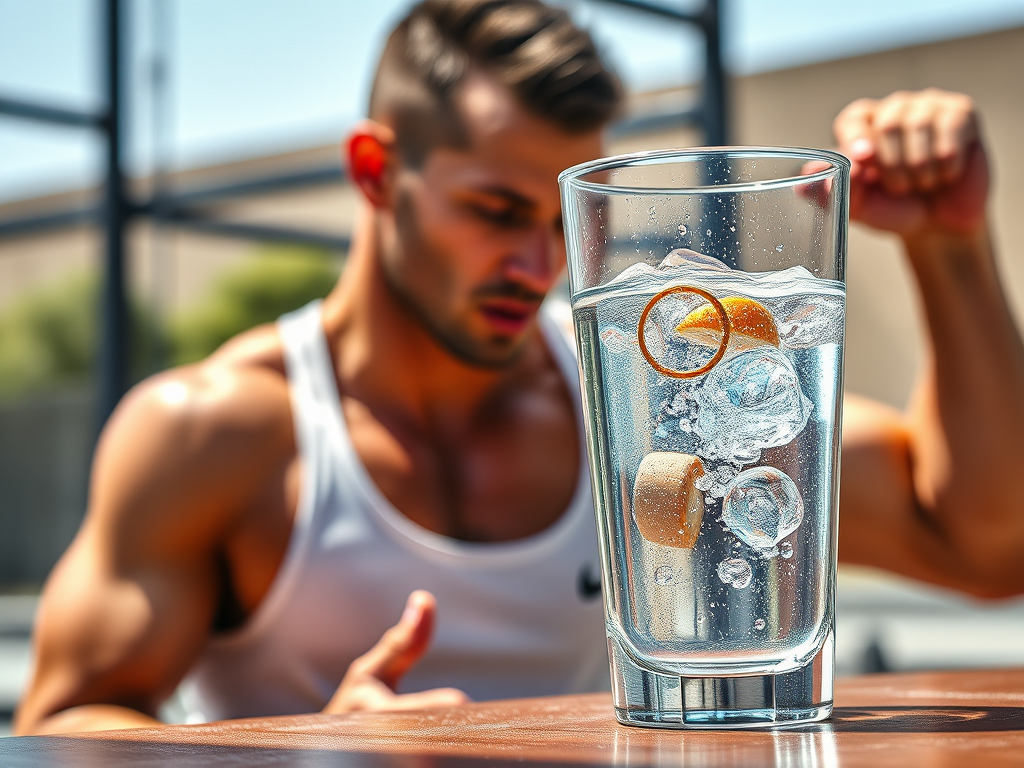
You can buy better shoes, better supplements, and better everything. But if you are consistently under-hydrated, your “stack” is basically being poured into a leaky bucket.
Hydration is not a magic hack. It is the baseline that makes the rest of your routine actually work.
Hydration is not a wellness trend. It is a performance input.
When you train, you are spending water. You lose it through sweat, breathing, and the simple fact that your body runs hotter and faster when you are pushing it.
Even mild dehydration can mess with how you feel and how you perform: you fatigue sooner, your heart works harder, your perceived effort goes up, and recovery can feel slower.
The good news is that you do not need a complicated system. You need a consistent one.
The “quiet symptoms” of under-hydration
Most people do not notice dehydration as thirst. They notice it as a handful of annoying, easy-to-misread signals:
- Workouts feel harder than they should even when you are not adding weight or volume.
- Pumps feel weak, cardio feels “sticky,” and you hit the wall early.
- Headaches show up after training or later in the day.
- Sleep is off, especially if you are training hard and sweating more.
- Soreness lingers and you feel “flat” on back-to-back days.
None of these prove dehydration on their own, but if you see a pattern, hydration is the cheapest place to fix the foundation.
Performance basics: what hydration supports
Hydration helps the body do a bunch of unsexy things that matter when you are trying to get stronger, faster, leaner, or more consistent:
- Temperature control so your body does not overheat and downshift early.
- Blood flow and circulation which impacts endurance and training feel.
- Joint lubrication and tissue health that supports movement quality.
- Nutrient transport so your post-workout meal actually gets to work.
- Recovery processes that happen all day, not just in the gym.
A simple hydration framework that works
1) Start the day with water
If you wake up and go straight to coffee, you are already behind. Start with a real glass of water first. Then do whatever you want.
Think of it as flipping the “on” switch before adding caffeine.
2) Drink before you are thirsty
Thirst is a late signal. If your goal is training performance, you want steady intake through the day, not a panic chug at 4 pm.
3) Build a pre-workout and post-workout habit
- 60–90 minutes before training: drink enough that you feel ready, not sloshy.
- During training: sip, especially if you sweat a lot or train longer sessions.
- After training: drink again, even if you feel “fine.” Your body is still paying the bill.
4) Use a check that is not weird
You do not need to weigh yourself before and after every session unless you are an endurance athlete or training in extreme heat.
A simple check is consistency and urine color: pale yellow most of the day is a decent sign you are on track.
Training in heat, long sessions, and heavy sweaters
If you train outdoors, do long sessions, or sweat like a faucet, hydration becomes even more important.
This is where planning matters:
- Bring more water than you think you need, especially for outdoor training.
- Do not “earn” water by waiting until you feel awful. Sip early.
- Replace what you lose across the rest of the day, not just right after the workout.
If you are doing very long sessions or intense heat, you may also need electrolytes. But water is still step one.
Why water taste matters more than people admit
Here is the real-life truth: people drink more when their water tastes clean.
If your water tastes like a pool, a penny, or “LA tap vibes,” you will unconsciously drink less and call it discipline.
It is not discipline. It is friction.
Make water easier to drink and you will drink more of it. That is the entire game.
The simplest upgrade you can actually stick to
Most routines fail because they are complicated, annoying, or require willpower every day.
Hydration is the opposite: it is repeatable, cheap compared to trends, and it improves how everything else feels.
If you want a clean, consistent option you will actually reach for, check out
Distilled Fulfilled’s shop
and build hydration into your training the easy way.
Leave a Reply