
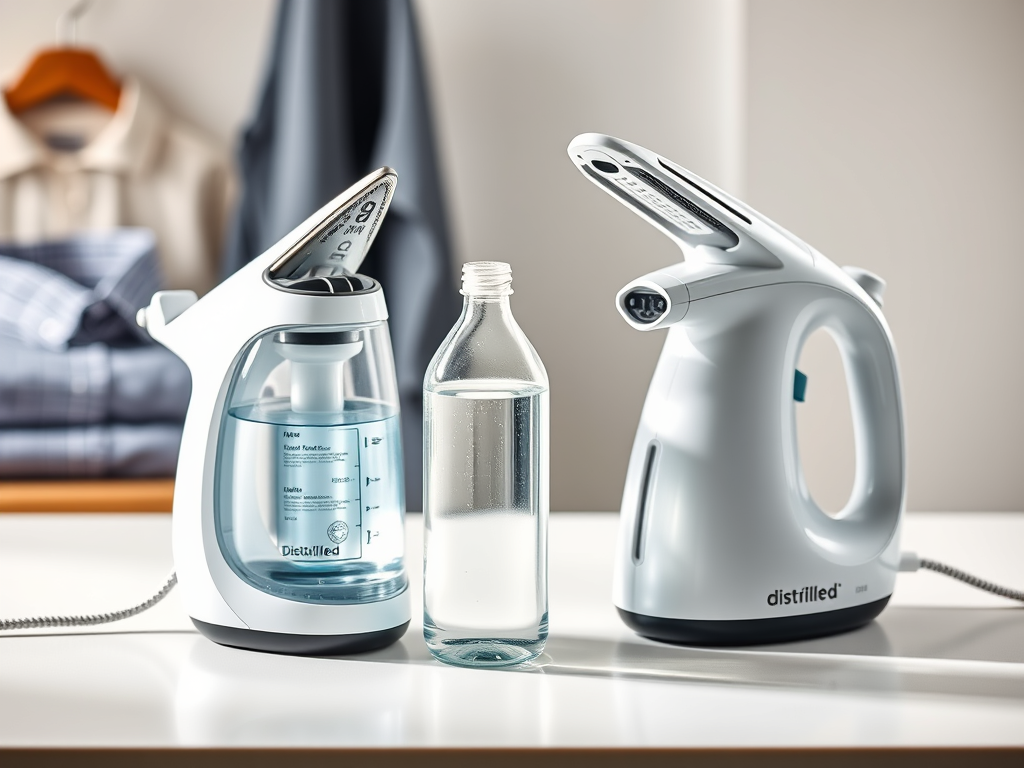
Steam irons and garment steamers look simple on the outside, but inside they are doing a lot with heat, water, and narrow internal pathways. That is why water choice matters more than many people realize. When mineral-heavy water is used again and again, scale can build up inside the appliance, interfere with steam flow, and create more maintenance than most people expect. Manufacturers like Philips, Rowenta, and Conair all warn that hard-water minerals can contribute to buildup and reduced performance.
For households that want a cleaner and more reliable water routine, Distilled Fulfilled offers premium distilled water in glass bottles, making it easier to keep the right water on hand for garment care, home devices, and everyday use without disposable plastic or last-minute store runs.
Why Scale Is Such a Common Problem
When water is heated into steam, the water itself leaves the tank and passes through the system, but dissolved minerals do not disappear with it. They stay behind and can collect on interior surfaces, around steam vents, and inside the small channels the appliance depends on to work properly. Over time, those deposits can reduce steam output, contribute to clogging, and make the appliance feel less effective than it did when it was new.
Philips notes that hard water can cause fast scale buildup in steam irons and garment steamers. Conair says distilled water helps prevent lime scale and minerals from building up in the tank and blocking the release of steam. Rowenta also includes specific hard-water guidance and descaling care for its garment-care appliances.
In other words, scale is not a cosmetic issue. It is one of the main reasons steam appliances become less reliable over time.
When Distilled Water Is Recommended
The first rule is to check the manufacturer’s instructions for your exact model. Not every brand uses the same wording, and not every appliance is designed the same way. Some models are built to tolerate tap water, while others perform better with distilled water or a distilled-water mix, especially in hard-water areas.
Philips says its steam irons and garment steamers are designed for tap water, but if you live in an area with hard water, it recommends distilled or demineralized water to help prolong the life of the appliance. Rowenta advises using a 50/50 mix of untreated tap water and distilled water in hard-water conditions for some of its products. Conair recommends distilled water in its decalcifying guidance to help avoid calcium and magnesium buildup.
That means distilled water is especially useful when your local water is hard, when your appliance has already shown signs of buildup, or when the manufacturer directly recommends it. In all three cases, the goal is the same: reduce the mineral load entering the machine before it becomes a maintenance problem.
What Distilled Water Helps Prevent
1. Internal Scale Buildup
This is the biggest benefit. Distilled water contains far fewer dissolved minerals than typical tap water, so there is less material left behind inside the tank, heating chamber, and steam system. That is why manufacturers regularly mention it in connection with appliance longevity and hard-water care. Philips specifically says distilled or demineralized water is recommended in hard-water areas to prolong the lifespan of the iron or steamer.
2. Weaker Steam Output
Steam needs a clear path to move through the appliance and out onto the fabric. When mineral deposits narrow that path, the appliance may produce weaker, more uneven, or more sputtering steam. Conair directly links mineral buildup to blocked steam release, which is one of the clearest explanations for why cleaner water can improve long-term performance.
3. More Frequent Clogs
Small steam holes and internal channels are especially vulnerable to mineral residue. Once deposits begin to collect, clogs can become more common, especially in appliances that are used frequently. Distilled water helps reduce the amount of mineral material available to create those obstructions in the first place.
4. Extra Descaling and Cleanup
Hard-water use often means more maintenance. Rowenta includes regular descaling guidance for steamers in hard-water areas and advises users to follow anti-calc instructions for their model. Distilled water does not eliminate maintenance, but it can reduce how often mineral buildup forces that maintenance.
Steam Irons and Garment Steamers Have the Same Basic Enemy
A steam iron and a garment steamer are different tools, but they deal with the same core problem. Both repeatedly heat water. Both rely on consistent steam flow. Both can become less effective when mineral deposits collect inside the machine.
In a steam iron, scale may show up as weaker steam, sputtering, or clogged steam holes. In a garment steamer, it may appear as reduced output, internal buildup, or a tank that gets dirtier and harder to maintain over time. The shape of the appliance changes, but the underlying issue stays the same. Mineral-heavy water leaves more behind than the appliance wants to handle.
What Distilled Water Does Not Replace
Using distilled water does not mean you can skip normal care. The appliance still needs to be emptied, cleaned, and maintained according to the manual. Rowenta advises emptying the water tank after use and following model-specific anti-calc instructions. That is an important distinction because distilled water helps reduce mineral-related problems, but it does not replace routine upkeep.
The honest promise is not “never descale again.” The honest promise is that cleaner water usually means less scale, fewer clogs, and less mineral-related wear over time.
Practical Tips for Cleaner Steam and Fewer Clogs
- Check the manual for your exact model before changing water type.
- If you live in a hard-water area, consider distilled water or the manufacturer’s recommended distilled-water mix.
- Empty the tank after use if the manufacturer advises it.
- Use self-cleaning or anti-calc features on schedule instead of waiting for performance to drop.
- Avoid adding perfumes, starches, or other liquids unless the manufacturer explicitly allows them. Philips specifically warns against perfumed water, vinegar, starch, descaling agents, ironing aids, and other chemicals in its steam irons and steamers.
Why This Matters for Everyday Garment Care
Garment-care appliances tend to work best when they are not fighting buildup from the inside. Cleaner water helps support more reliable steam, more predictable performance, and less maintenance over the life of the appliance. That is especially valuable in homes that iron or steam clothing often, and even more so in areas where hard water is already known to create scale in other appliances.
For customers looking to make that routine easier, Distilled Fulfilled provides premium distilled water in glass bottles, helping households keep cleaner water on hand for garment care, home devices, and daily use.
The Bottom Line
Steam irons and garment steamers do not usually become frustrating because steam is complicated. They become frustrating because minerals build up where they should not. Distilled water helps reduce the scale that leads to weaker steam, more clogs, and more maintenance, especially in hard-water areas. The exact rule should always come from the appliance manual, but the broader principle is simple: less mineral content usually means less trouble inside the machine.
Leave a Reply