
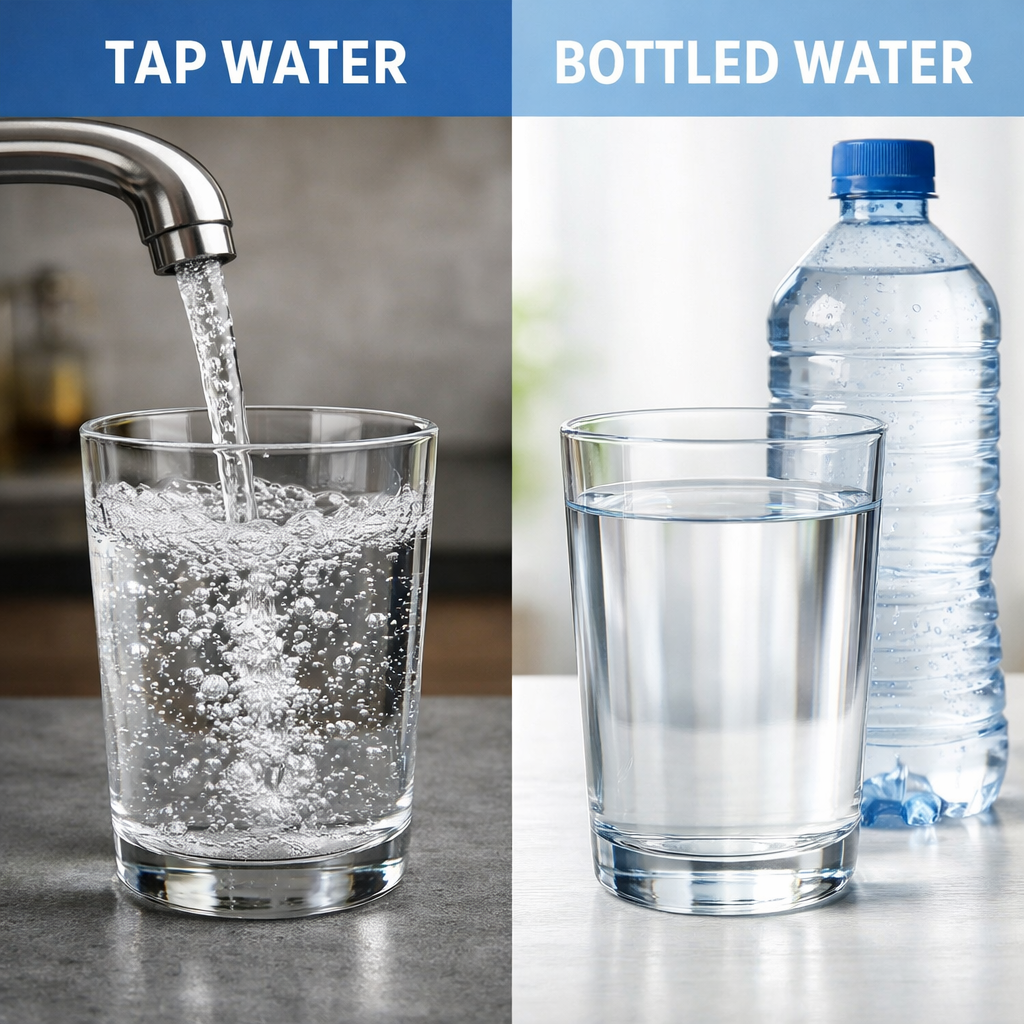
People love to talk about water like it should all taste the same. It does not. Even when water is safe to drink, the way it tastes can shift depending on what is dissolved in it, how it travels through plumbing, how cold it is, and what kind of container it sits in. The EPA’s secondary drinking water standards exist partly because taste, odor, and appearance matter to people, even when the issue is more aesthetic than dangerous.
If you have ever thought one glass tasted crisp, another tasted flat, and another had a weird metallic or plasticky note, you were not imagining it. Water is simple, but the drinking experience is not.
Minerals change the flavor more than most people realize
The biggest reason water tastes different is dissolved minerals. Calcium, magnesium, sodium, sulfate, chloride, iron, copper, and other dissolved solids can all affect flavor. The EPA notes that contaminants such as chloride can create a salty taste, sulfate can affect taste, and copper, iron, and manganese can contribute metallic or otherwise unpleasant flavor notes.
This is one reason “hard” water and “soft” water do not taste the same. Hard water contains more calcium and magnesium. Some people describe that as fuller or chalkier. Water with higher dissolved solids can taste heavier or more mineral-forward. Water with very low dissolved solids often tastes cleaner, lighter, or more neutral.
That is also why two cities can both have safe municipal water and still taste completely different. Their source water is different. Their mineral profile is different. Their treatment process is different. Your tongue notices all of it.
Pipes and plumbing can add their own signature
Water does not come straight from the source into your glass. It moves through infrastructure first, and that matters. Older plumbing, corroded fixtures, scale buildup, or metal leaching can all change taste. The EPA lists copper, iron, manganese, and corrosivity-related issues among the factors that can create metallic taste and staining. The CDC’s ATSDR copper guidance also notes that metallic or bitter taste can be a sign of excess copper in drinking water.
This is why the first glass in the morning can taste different from the second. Water that has been sitting in household pipes overnight has had more contact time with those materials. In some homes, that stale or metallic edge is not about the source water at all. It is about what happened between the main line and your faucet.
Plumbing can also interact with disinfectants and treatment chemistry. So even when a utility is doing everything right, your in-home system can still shape the final taste.
Temperature changes how strongly you notice flavor
Cold water usually tastes “better” to more people, but that is not magic. Temperature changes perception. The World Health Organization’s drinking-water guidance treats temperature as part of acceptability because it influences taste and consumer preference.
Very cold water tends to mute certain flavors and odors. That means mineral notes, sulfur notes, and container-related flavors may be less noticeable when water is chilled. As water warms up, flaws become easier to detect. That is one reason room-temperature water from a plastic bottle left in the car tastes a lot worse than cold water poured fresh into a clean glass.
It is not just in your head. Temperature changes the experience.
Container materials matter more than people want to admit
The container is part of the flavor equation. Water stored in plastic, metal, glass, or low-quality reusable bottles does not always come across the same way. The FDA regulates bottled water for safety, but safety and taste are not identical questions. A material can be compliant and still affect the sensory experience.
Plastic is the obvious example. Heat, storage conditions, and time can make plastic-associated smells or flavors more noticeable. Stainless steel containers can sometimes leave a faint metallic impression to sensitive drinkers. Poorly cleaned reusable bottles can make even good water taste musty, sour, or stale.
Glass is popular for a reason. It is nonporous, does not hang onto old flavors the way some materials can, and generally stays out of the way. If the goal is neutral taste, glass gives water less interference.
Why some water tastes “clean” and some tastes “off”
When people say water tastes clean, they usually mean one of two things. Either the mineral content is lower and more neutral, or the water has been stored and served in a way that keeps outside flavors from getting involved. When people say water tastes off, they are usually noticing one of the following:
- High mineral content
- Metallic notes from plumbing
- Chlorine or treatment-related smell
- Warm temperature that makes flaws easier to notice
- Plastic or stale container flavor
- Old ice, dirty bottles, or residue in the serving vessel
Sometimes the problem is the water itself. Sometimes the problem is everything around it.
Why this matters for coffee, tea, cocktails, and daily drinking
If you are making coffee, brewing tea, mixing cocktails, filling a humidifier, or just trying to drink more water every day, taste matters. Water that tastes neutral is easier to enjoy on its own and less likely to interfere with flavor-driven uses. That is one reason people who care about consistency often pay attention not just to source water, but also to storage, serving temperature, and the material of the bottle or glass.
For households and businesses that want a cleaner, more neutral drinking experience, container choice is a real part of the equation. Water in glass avoids a lot of the taste baggage people associate with plastic storage, especially when heat and time get involved.
The bottom line
Water tastes different because water is never just water in practice. It carries dissolved minerals. It passes through pipes. It responds to temperature. It sits in containers made of real materials that affect the final experience.
If you want water that tastes cleaner and more consistent, look at the whole chain, not just the label. Source matters. Storage matters. Temperature matters. Container material absolutely matters.
And if you want distilled water in glass that keeps the experience simple and clean, explore the options at Distilled Fulfilled’s shop.
Leave a Reply