
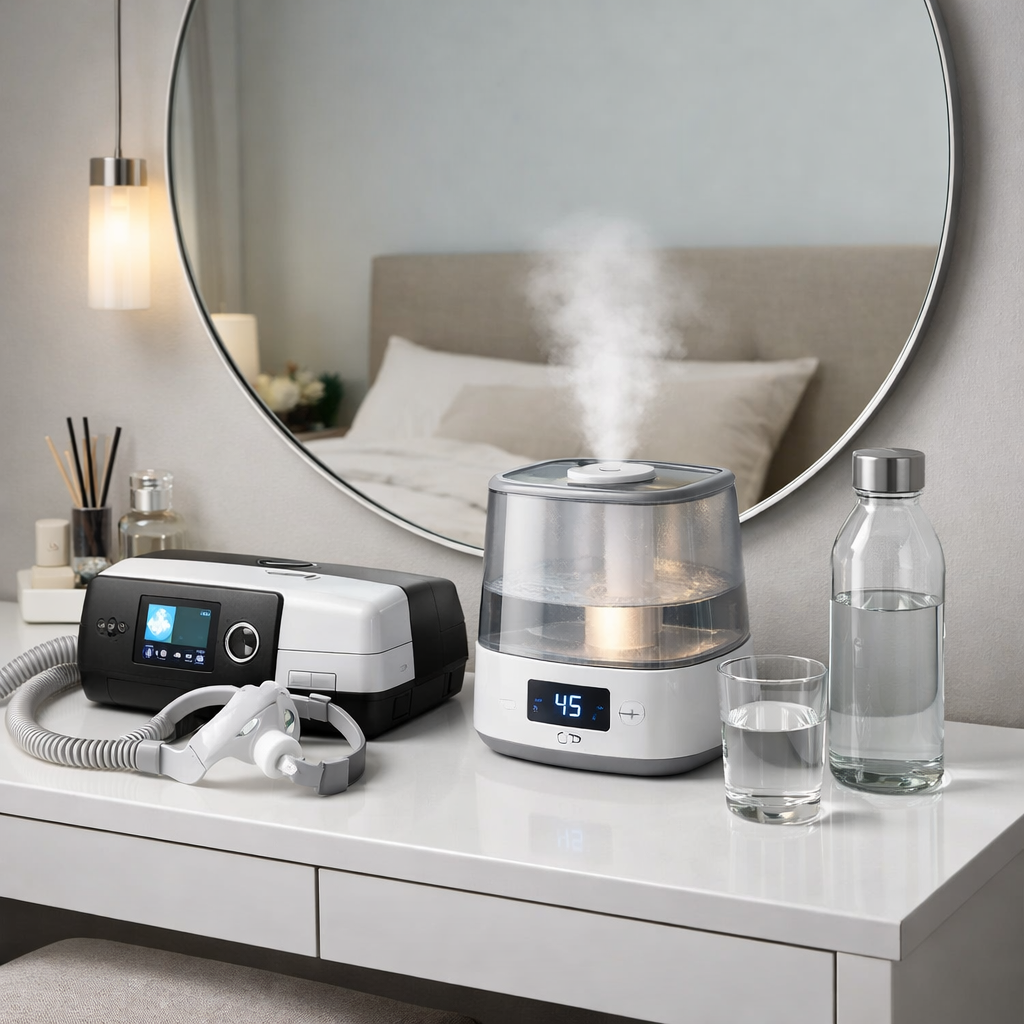
“Use distilled water” gets thrown around so often that people either ignore it or assume it is some kind of overcautious fine print. In reality, that advice means different things depending on the device. Sometimes it is about serious safety. Sometimes it is about preventing scale, residue, and mineral dust. Sometimes it is both.
If you are using a CPAP, a neti pot, or other home devices that heat, mist, or route water into sensitive areas of the body, the smartest move is to understand why distilled water is being recommended, not just memorize the label. That is the difference between protecting your equipment, protecting your health, and wasting time with half-true advice.
For homes, wellness routines, and device care, you can shop distilled water here: Distilled Fulfilled.
First, What Distilled Water Actually Changes
Distilled water is water that has been vaporized and condensed, leaving behind most minerals and many impurities. In plain English, that means it is very low in dissolved minerals compared with most tap, spring, or purified drinking water.
That matters because minerals do three annoying things in home devices: they leave crust and scale, they can shorten the life of tanks and chambers, and in some misting devices they can get dispersed into the air as fine white dust. The EPA specifically advises using low-mineral water such as distilled water in portable humidifiers to reduce mineral release into the air and to help limit scale buildup, alongside regular cleaning and water changes. EPA guidance says exactly that.
But low mineral content is not the whole story. In certain uses, especially nasal rinsing, the issue is not just residue. It is whether the water is safe to put into your nose. That is where “use distilled” stops being a convenience recommendation and becomes a health rule.
When Distilled Water Is Non-Negotiable: Neti Pots and Nasal Rinses
This is the category where people should stop freelancing. The FDA says to rinse only with distilled, sterile, or previously boiled water for neti pots and other nasal rinse devices. The reason is simple: tap water may be safe to drink, but it is not safe to send into your nasal passages unless it has been properly treated for that purpose. FDA consumer guidance.
The CDC says the same thing. For sinus rinsing, use store-bought water labeled distilled or sterile, or use tap water that has been boiled and then cooled. The agency is explicit that you should always use distilled, sterile, or boiled and cooled water for nasal rinsing. CDC guidance on safe sinus rinsing.
This matters because organisms that may be neutralized by stomach acid when swallowed are a different story when they go through the nose. The CDC has also published on infections linked to unsafe nasal rinsing and continues to recommend distilled, sterile, or boiled water for this exact reason. CDC Emerging Infectious Diseases article.
Bottom line for neti pots: distilled is not a preference. It is one of the approved safe-water options. Straight tap water is not.
CPAP: Safety, Comfort, and Mineral Buildup Are All in the Mix
CPAP advice gets muddy because different sources say slightly different things, and both can be true depending on the machine and water chamber.
At the broad public-health level, the CDC notes that for home medical devices such as CPAP humidifiers, you should follow the manufacturer’s instructions, and that most manufacturers recommend distilled water. CDC household water guidance.
At the manufacturer level, details vary. ResMed, for example, says its HumidAir 11 Standard water tub should use distilled water only, while its HumidAir 11 Cleanable tub can use drinking-quality potable water. ResMed FAQ guidance. ResMed also advises routine cleaning of the humidifier tub, including soaking it weekly and rinsing thoroughly. ResMed cleaning instructions.
So what does “use distilled” usually mean in real life for CPAP? It usually means this:
- Less mineral residue in the humidifier chamber
- Less scale buildup over time
- Cleaner operation with fewer deposits to scrub off
- Better alignment with many manufacturer instructions
That does not mean every drop of non-distilled water instantly ruins a CPAP. It means distilled water is generally the cleaner, lower-residue choice, and in some machines it is the specific manufacturer requirement. If your chamber is the type approved for potable water, that is one thing. If your manual says distilled only, do not improvise.
What About Humidifiers and Other Home Misting Devices?
This is where people often confuse “medically dangerous” with “annoying but avoidable.” Humidifiers are usually more about air quality, mineral dust, and maintenance than the kind of direct nasal-risk issue you see with neti pots.
The EPA recommends low-mineral water such as distilled water in portable humidifiers to reduce the release of minerals into the air. It also recommends emptying, drying, and refilling portable units daily and cleaning them every third day to reduce scale and microorganism growth. EPA humidifier guidance.
Mayo Clinic similarly advises using distilled or demineralized water in humidifiers and cleaning them regularly. Mayo Clinic humidifier guidance.
Bottom line for humidifiers and similar home devices: distilled matters most when you want to reduce white dust, scale, and cleanup headaches. It is less about mystique and more about not turning your machine into a mineral crust museum.
What “Use Distilled” Does Not Mean
It does not mean every device has the exact same reason for the recommendation.
It does not mean “purified,” “filtered,” “spring,” and “distilled” are interchangeable. Purified drinking water may be cleaner than tap water, but it can still contain minerals that leave residue behind. Distilled water is being singled out because it is especially low in those dissolved solids.
It also does not mean distilled water replaces cleaning. A dirty device filled with distilled water is still a dirty device. Manufacturers and public-health agencies repeatedly pair water guidance with routine cleaning and drying because residue and microbial growth are separate issues. ResMed and the EPA both make that clear.
When It Matters Most
If you want the fast version, here it is:
- Neti pots and nasal rinses: distilled, sterile, or previously boiled and cooled water matters the most because this is a direct safety issue. FDA, CDC
- CPAP humidifiers: distilled often matters because many manufacturers recommend or require it, and it helps prevent buildup and simplify maintenance. Always check your exact model and chamber. CDC, ResMed
- Humidifiers and similar home devices: distilled matters mainly for reducing mineral dust, scale, and grime, especially with regular use. EPA, Mayo Clinic
The Practical Rule Most People Can Actually Use
If the water is going into your nose, use only approved safe options such as distilled, sterile, or properly boiled and cooled water.
If the water is going into a chamber, misting system, or heated home device, distilled is usually the best choice when you want to minimize minerals, residue, and maintenance, even if certain models may allow potable water.
And if the device has a manual, read the manual before you trust a random internet summary, because “use distilled” can mean slightly different things depending on the exact product sitting on your counter.
Final Take
The phrase “use distilled” is not fake caution, but it is also not one-size-fits-all. For neti pots, it is primarily about safety. For CPAP, it is often about manufacturer compliance, cleaner humidification, and less mineral buildup. For humidifiers and similar home devices, it is mostly about scale control and cleaner air output.
That is the real distinction. Same phrase, different stakes.
If you want distilled water delivered in glass for home use, wellness routines, and device care, shop here: Distilled Fulfilled.
Leave a Reply