
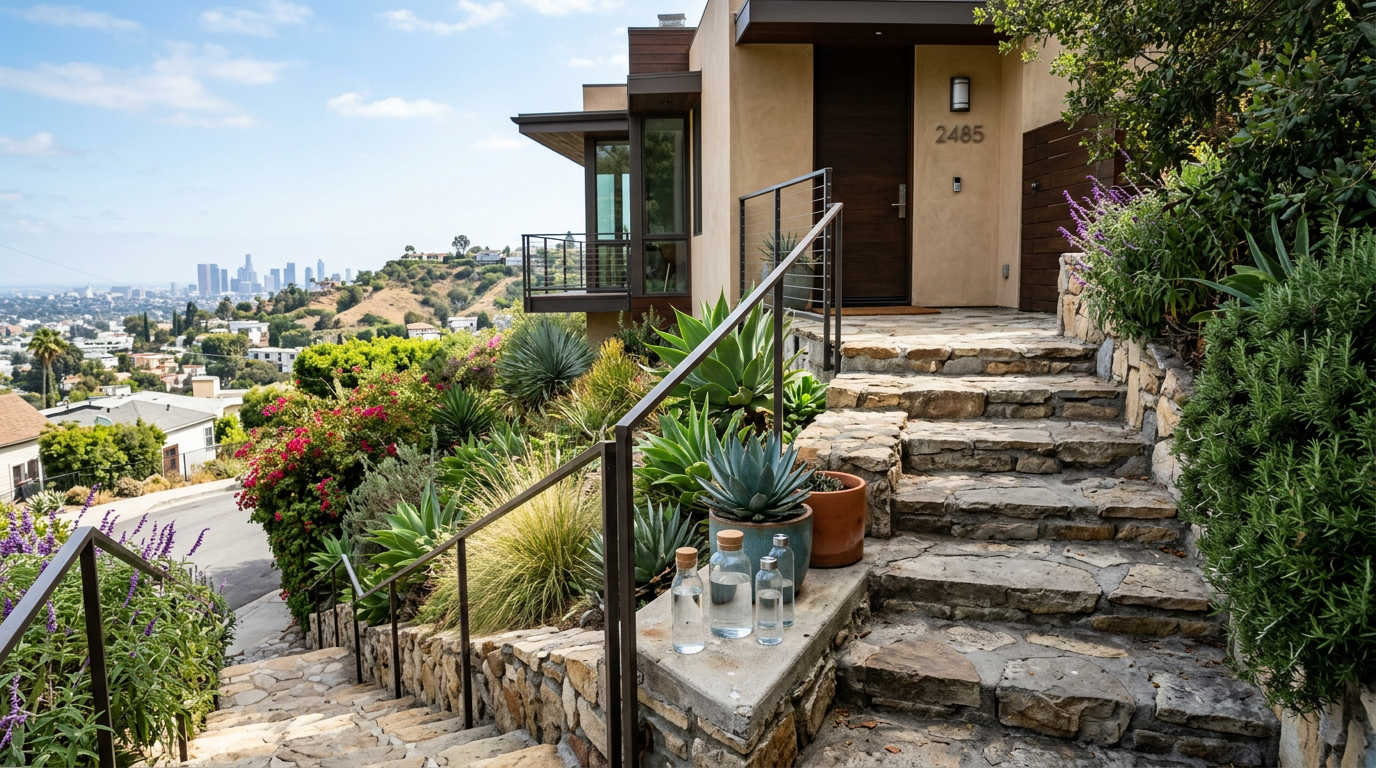
Los Angeles hillside homes come with views, character, and at least one access quirk that would make a flat-lot delivery driver raise an eyebrow. Long stair runs, narrow driveways, tight turnarounds, locked gates, limited parking, and addresses that seem to hover somewhere above the street are all part of the package. When you need regular water delivery, those details matter more than people think.
That is especially true when you prefer distilled water in reusable glass bottles or glass jugs. Distilled water is a clean, low-mineral, neutral baseline, and reusable glass can be a practical fit for households trying to cut down on single-use plastic. But on a steep hillside property, the difference between a smooth delivery and a frustrating one usually comes down to logistics, not good intentions.
Distilled Fulfilled serves Los Angeles-area customers who want premium distilled water delivered in a consistent, usable way. For hillside homes, that means thinking through the real-world route from curb to kitchen, garage, or staging area. If your property has stairs, a security gate, a steep drive, or a narrow lane that turns every simple errand into a small production, a little planning goes a long way.
Here is how to make water delivery to a hillside home safer, easier, and more reliable for everyone involved, from your first access note to your regular bottle-return routine.
Why Hillside Delivery Is Its Own Category
On a typical flat residential street, delivery is straightforward: park nearby, carry the order a short distance, place it in an agreed-upon spot, and collect empties. Hillside neighborhoods are different. Even when two homes share the same ZIP code, one may have simple curb access and the next may require a long climb, a gate code, and a careful walk up a steep path with limited footing.
That matters because distilled water delivery is not the same as dropping off a lightweight parcel. Reusable glass bottles and glass jugs are sturdy, useful, and premium, but they also require secure handling and sensible placement. Drivers need to know whether they can access the property directly, whether there is a turnaround, whether stairs are involved, and where bottles should be safely set down.
The more clearly you communicate those details in advance, the more likely your delivery will happen on schedule and without confusion. In hillside areas, “leave at front door” is often not enough. A good access note can save a missed delivery, a string of phone calls, or a bottle placement that is technically delivered but not actually convenient for your household.
The Access Notes That Actually Help
If you live on a hillside property, you already know that your home is less intuitive to approach than many think it is. You know which gate sticks, which stair rail is solid, and which parking spot is acceptable for ten minutes. A first-time driver does not. The best delivery notes are specific, short, and practical.
Useful details to include before delivery
- Whether the property is best accessed from the upper street, lower street, alley, or main driveway
- If there is a gate, whether it will be unlocked, attended, or requires a code or call box
- How many stairs are involved and whether there is a handrail or a wide landing
- Whether the driveway is too steep, narrow, or difficult for routine delivery access
- Where legal or realistic parking is usually available
- The safest drop-off point, such as garage entry, side gate landing, covered porch, or lower-level entry
- Whether dogs, construction, landscaping crews, or ongoing repairs may affect access
- How bottle returns should be staged for pickup
Good notes sound like this: “Please use lower driveway entrance from Oak View. Park in the marked pullout if available. Twenty steps to side gate, code provided. Leave full bottles on left-side covered landing and collect empties from same location.” That kind of note is much more helpful than “hillside house, call when here.”
If access changes temporarily, update the note before the next delivery. A repaving project, a broken gate latch, or a contractor truck parked across the drive can completely change what is feasible that day.
Gates, Codes, and the Difference Between Secure and Complicated
Security gates are common in hillside Los Angeles neighborhoods, and they make perfect sense. But for delivery, they can be the point where a smooth route turns into a delay. If your gate is routinely locked, the driver needs a realistic way to get in during the delivery window.
That might mean a gate code, a call box instruction, or a note that someone will be available to buzz the driver in. If cell service is weak on your street, that is worth mentioning too. Hillside canyons are scenic, but they are not always friendly to reception.
Try to avoid last-minute, complicated gate workarounds. “Text when you arrive, then wait for me to open the upper gate remotely, unless I am in a meeting” is not a system; it is a gamble. If possible, create a dependable delivery routine with one consistent gate and one consistent placement area. That is easier on your household and easier on the delivery team.
If glass is part of your routine, secure access also helps with placement. You want bottles left in a stable, protected area, not balanced near a gate swing, squeezed into a narrow threshold, or set where they could be bumped by a door, pet, or passing vehicle.
Stairs: Be Honest About the Climb
A hillside stairway may feel normal to the people who live there, but a delivery route with multiple flights, uneven treads, or no landing is a meaningful access condition. Mentioning stairs upfront is not over-explaining. It is basic courtesy and good logistics.
If your home requires climbing a substantial number of steps, say so clearly. The same goes for irregular paths, tight turns, or narrow stair runs where carrying larger glass containers takes extra care. Even if a delivery can still be completed, knowing the route in advance helps with planning and placement.
It is also smart to think about whether the top of the stairs is really the best destination for every order. In some homes, a lower-level garage, side entrance, or secure covered landing is more practical than asking a driver to carry bottles to the highest interior entry point. The goal is not to create a dramatic workout for everyone involved. The goal is reliable service and safe handling.
If you are setting up recurring deliveries and your property has a challenging climb, this is a great time to shop Distilled Fulfilled’s distilled water in reusable glass bottles and pair your order with a realistic, repeatable drop-off plan that fits the way your home is actually accessed.
Steep Driveways and Narrow Turnarounds
Many LA hillside driveways look drivable in theory and complicated in practice. Some are extremely steep. Some narrow sharply near the top. Some do not offer a safe or simple turnaround. Others are technically accessible but become a problem when street parking or service vehicles block the lower entrance.
For routine delivery, it helps to separate what is physically possible from what is consistently practical. If your driveway is difficult enough that guests avoid it, say that. If a driver should not attempt the driveway at all, make that explicit and provide the better alternative. A curbside handoff point, garage-side landing, or lower gate staging area may be the more reliable solution.
This is not about being fussy. It is about reducing uncertainty. A steep driveway can affect footing, carrying distance, and where glass bottles can be safely set down. Smooth delivery usually starts with realistic expectations about whether the route should go up the drive or around it.
Parking Is Not a Small Detail
In hillside neighborhoods, parking can be the whole story. Tight streets, red curbs, permit zones, tow-sensitive corners, and houses perched above narrow lanes all affect how easy it is to complete a delivery. If there is a preferred short-term parking spot that is generally acceptable, mention it. If there is a specific side of the street that works better, note that too.
What you want to avoid is a situation where the delivery team arrives but has no safe place to stop within a workable distance of the house. Even a short delay can matter if access depends on a gate opening, a timed call, or a narrow delivery window.
Helpful parking notes include things like:
- “Best parking is in the small pullout just past the mailbox”
- “Do not block the upper neighbor’s driveway”
- “Street is narrow; easier approach is from the west end”
- “No shoulder parking after school pickup hours”
These are the kinds of local details that make a service feel thoughtful instead of improvised.
Where to Place Full Bottles Safely
On a flat lot, “front porch” may be enough. On a hillside property, safe delivery placement deserves more thought. The right staging area should be stable, sheltered if possible, easy to reach, and away from obvious traffic paths. For glass bottles and glass jugs, that matters even more.
Good placement areas often include a covered side landing, a garage entry shelf area, a recessed porch corner, or a lower gate alcove with level footing. Less ideal spots include the top step of a stair run, the edge of a sloped walkway, directly behind an outward-swinging gate, or any place where a bottle could be clipped by a car door or knocked by pets, kids, or contractors.
If you have a preferred placement zone, describe it clearly and keep it consistent. Consistency helps avoid confusion and also makes bottle-return pickup easier, because the full and empty exchange can happen in the same predictable location.
If your property hosts frequent events, renovations, or short-term guests, remember that glass may not always be the right fit for every area. Use judgment about where reusable glass belongs, and follow any property rules or safety requirements that affect storage or placement.
How to Stage Empty Bottle Returns Without Creating Clutter
Return logistics are half the routine. A clean, organized return area helps your next delivery go faster and keeps your home from developing a weird little bottle district by the gate.
The easiest system is to designate one stable spot for empties and keep them upright, together, and accessible. That spot should be protected from heavy foot traffic and not create a tripping hazard on stairs or narrow paths. If weather exposure is an issue, a covered area is usually better than leaving returns out in the open.
Simple bottle-return habits that work well
- Keep empty bottles in the same delivery location each cycle
- Stage them before the delivery window, not after the driver arrives
- Leave a clear path to the returns area
- Do not stack bottles in unstable ways on steps or sloped surfaces
- If a gate will be locked, make sure returns are inside the accessible zone
- Move landscaping tools, hoses, and packages away from the bottle area
If your household uses more than one entry, decide which location is the “water spot” and stick with it. That small bit of discipline makes recurring service much easier. It also helps if more than one person in the home may accept deliveries or move empties around.
Communicating Temporary Constraints Before Delivery Day
Hillside properties are especially sensitive to temporary obstacles. A tree trimming crew in the driveway, fresh concrete on the steps, a film shoot on the block, or a gate motor issue can turn a familiar route into a no-go. If something changes, say so before delivery day whenever possible.
This is one of the simplest ways to prevent missed service or awkward improvisation. Even a brief heads-up is useful: “Upper stairs blocked by painters this week; please leave order at lower garage door.” That gives the delivery team a workable plan and saves you from having to chase down an order after the fact.
If you know your home is difficult to access in bad weather, heat, or low-light conditions, plan accordingly. Some hillside paths get slick, shaded, or cluttered faster than people realize. Maintaining a clear route and communicating changes are small things that make recurring delivery much more dependable.
How Much Detail Is Too Much?
There is a sweet spot. You do not need to write a novella about your retaining wall history. But for a hillside home, a few lines of precise, operational information are worth far more than broad instructions. Think in terms of route, entry, placement, and return.
A good test is this: if a capable first-time driver read your note, could they confidently figure out where to park, how to access the property, where to place full bottles, and where to collect empties? If the answer is yes, your note is probably in good shape.
And if you are building a regular household routine around premium distilled water, now is a practical moment to shop Distilled Fulfilled’s distilled water in reusable glass bottles with a setup that matches your stairs, gates, driveway, and preferred staging area from the start.
Why This Matters for a Better Everyday Routine
People often think of delivery as a simple convenience, but on an LA hillside property it is really a system. The best system is one that works quietly in the background: no repeated gate confusion, no guessing where to leave bottles, no scramble to move empties, and no unrealistic expectation that every order can be handled like a standard curbside drop.
That is where a little planning pays off. Distilled water does not need mystical claims to be useful. For many households, it is simply a clean, low-mineral, neutral option they prefer to keep on hand. And reusable glass bottles or glass jugs can fit neatly into that routine when the delivery plan reflects the realities of the property.
Los Angeles hillside living already asks enough of your groceries, furniture, guests, plumbers, and delivery apps. Your water routine does not need extra drama. Clear access notes, safe placement, smart returns staging, and honest communication about stairs or gates are what make the service feel easy.
Final Sip
For hillside homes, good water delivery is mostly about logistics: clear gate instructions, realistic parking notes, honest stair details, safe bottle placement, and a consistent spot for returns. When those basics are handled well, regular delivery becomes much smoother.
If you want a cleaner, more organized routine built around reusable glass, make Distilled Fulfilled’s bottles or glass jugs part of the plan and shop Distilled Fulfilled’s distilled water in reusable glass bottles with your property’s real access needs in mind.
Leave a Reply