
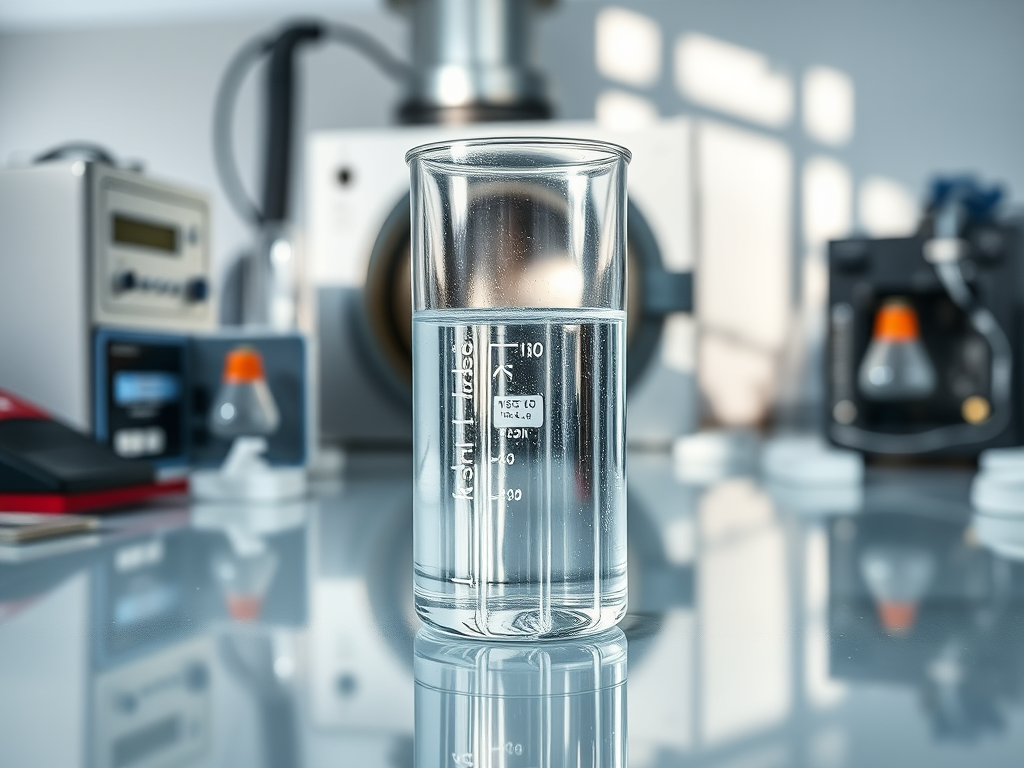
For scientific, medical, and industrial workflows, the quality of your water is a controllable variable that can reduce contamination risks and extend equipment life. This guide explains when and why to choose distilled water for lab procedures, autoclaves, electronics rinsing, and 3D resin cleanup, plus how to store and handle it correctly.
Water Types Overview and Why Distilled
Laboratory and production environments typically encounter several purified water types. Each method targets different contaminants. Distilled water is a reliable baseline for general purity because distillation physically separates water from most dissolved solids and many organics by phase change.
| Water Type | How It Is Made | What It Removes Best | Typical Use Cases |
|---|---|---|---|
| Distilled Water | Boil and condense vapor into a clean vessel | Minerals, salts, many metals, many particulates, many microbes | Autoclave reservoirs, glassware rinse, reagent prep where ionic contaminants are a concern, electronics final rinse |
| Deionized (DI) Water | Ion exchange resins remove cations and anions | Dissolved ions | Analytical prep sensitive to ions, feed to polishing systems. Quality depends on resin condition |
| Reverse Osmosis (RO) Water | Semi-permeable membrane under pressure | Many dissolved salts, organics, particulates, microbes | Pre-treatment or bulk process water. Often followed by DI or distillation |
| Ultrapure (Polished) Water | RO or distilled, then DI, UV, and sub-micron polishing | Extremely low TOC and ions | Critical assays, semiconductor fab, high sensitivity analytics |
Key takeaway: When you need consistent low mineral content with simple logistics, distilled water offers dependable quality for many sterilization, rinsing, and prep tasks.
Autoclave and Sterilizer Requirements
Mineral deposits are the enemy of steam generators, chambers, and plumbing. Using distilled water helps prevent scale, reduces maintenance, and supports consistent steam quality.
Good Practice Checklist
- Fill reservoirs with fresh distilled water only. Avoid tap or softened water.
- Keep a dedicated, labeled dispenser for autoclave fill to avoid cross-contamination.
- Wipe and dry chamber gaskets and trays after cycles to prevent residue buildup.
- Drain and refill reservoirs on a regular schedule to limit biofilm and particulates.
- Document each fill in your sterilizer log for traceability.
Simple SOP: Reservoir Refill
- Power down and cool the unit per the manual.
- Drain remaining water into an approved container.
- Inspect and clean the reservoir if residue is visible.
- Refill with new distilled water from a sealed container.
- Record date, lot, and operator initials in the log.
Tip: Keep an extra case of distilled on hand to avoid emergency fills with tap water.
Manufacturer first: Always follow your specific sterilizer manual for water quality notes, descaling intervals, and warranty terms.
Electronics and 3D Resin Cleanup
For precision cleaning and post-processing, ionic residue from hard water can cause corrosion, dendrite formation, or surface defects. A distilled water rinse minimizes leftover ions and particulates.
Electronics Rinse Water
- Use distilled water for the final rinse after solvent or detergent cleaning of PCBs and assemblies.
- Follow with isopropyl alcohol or controlled warm air to accelerate drying.
- Avoid tap water contact with exposed copper, silver, or delicate connectors.
3D Resin Post-Processing
- After primary solvent baths, a distilled water rinse helps remove trace resin or detergent.
- Use separate labeled rinse tubs: Solvent then Distilled Rinse.
- Replace rinse water frequently to keep contamination low and surface finish consistent.
Avoid spotting: Distilled water reduces mineral spots on housings, lenses, and optical parts during air dry.
Storage, Labeling, and Glass Handling
Clean water is only useful if it stays clean. Protect your supply chain from the drum to the benchtop.
Storage
- Store sealed containers in a clean, cool, low-light area away from chemicals with strong odors.
- Use first in, first out rotation to maintain freshness.
- Keep caps closed between pours. Do not leave funnels in the neck.
Labeling and Traceability
- Label all secondary containers with product name, source, lot, and date opened.
- Maintain a simple log for autoclave fill, rinse bays, and reagent prep to trace lots if issues arise.
Glassware and Contact Surfaces
- Final glassware rinse with distilled water to reduce spots and carryover ions.
- Air dry on clean racks. Avoid wiping with towels that can shed fibers.
- Dedicate carboys and wash bottles to distilled water. Label clearly to prevent misuse.
Choosing a Reliable Source
- Ask for consistent lot quality and documented production controls.
- Request clarity on container type, seal integrity, and handling during delivery.
- Confirm convenient reorder and subscription options for steady operations.
FAQ: Distilled Water Lab Use, Autoclave Water, and Electronics Rinse Water
| Question | Short Answer |
|---|---|
| Can I mix tap water and distilled for the autoclave? | It is not recommended. Minerals in tap water promote scale and can void service agreements. |
| Is distilled water safe for PCB rinsing? | Yes for final rinses. Dry quickly to avoid standing moisture on components. |
| How often should I change distilled rinse tubs? | Change on a defined schedule or when turbidity increases. Keep a simple log for consistency. |
| Is distilled the same as DI? | No. Methods differ and so do impurity profiles. Many labs use distilled as a dependable general standard. |
Leave a Reply