
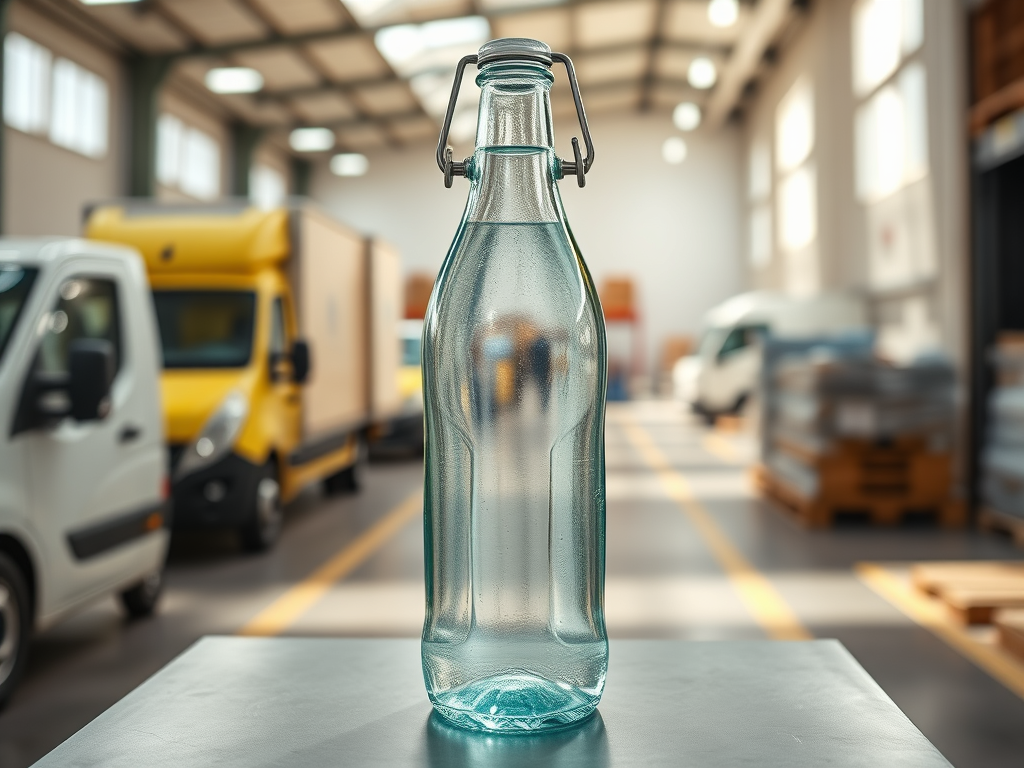
A refill-and-return system sounds simple until you try to run one in the real world. Drop off full bottles. Pick up empties. Clean them. Refill them. Deliver them again. Easy, right?
Not exactly.
A true closed-loop delivery system is not just a nicer version of bottled water service. It is part logistics operation, part sanitation process, part inventory system, and part customer behavior challenge. That is one reason so many companies love to talk about reuse, but far fewer build a system that actually works at a high standard.
For Distilled Fulfilled, that challenge is the point. If you care about premium distilled water, glass bottles, and a better alternative to disposable plastic, you cannot fake the loop. You have to build it, maintain it, and protect it every single day.
What a closed-loop system actually is
In plain English, a closed-loop refill system means the container is not treated like trash after one use. It goes out full, comes back empty, gets inspected, cleaned, sanitized, and put back into circulation if it still meets quality standards. The Ellen MacArthur Foundation’s work on circular systems and reuse has helped make this distinction clearer: reuse only works when the container and the system around it are both designed to keep circulating.
That sounds obvious, but it changes everything. It means a bottle is not just packaging. It is an asset. It has to come back. It has to stay in good shape. It has to move through a controlled process before it ever touches product again.
Delivery is only half the job
Most people understand delivery. A business fills bottles, packs them, and brings them to homes or offices. The hidden difficulty is the reverse trip.
Now the business has to get those empties back efficiently. It has to avoid wasting route time. It has to prevent bottles from disappearing into garages, office kitchens, storage rooms, or recycling bins. It has to make returns simple enough that customers actually participate. That is why reuse-system research from the Ellen MacArthur Foundation keeps stressing convenience, route density, and standardized systems. Reuse is not just about good intentions. It depends on repeatable behavior.
If pickups are inconsistent, or if the delivery footprint is too scattered, the economics get ugly fast. Every missing bottle is a cost. Every delayed return slows the loop. Every extra mile to recover empties makes the system less efficient.
Returned does not mean ready
This is where a lot of people underestimate the work. A returned bottle is not automatically reusable just because it came back.
It has to be checked. Is it chipped? Cracked? Scratched up? Was it stored properly? Did it come back clean and intact, or was it used carelessly? A refill system only works when bottles that return are still fit for service. If the return rate looks good on paper but the condition of the returned bottles is poor, the loop is weaker than it appears.
That is one reason glass quality matters so much. According to the Glass Packaging Institute, glass is nonporous and impermeable, which helps protect taste and product integrity. That does not eliminate the need for inspection, but it does make glass a serious material for premium refill systems.
Cleaning and sanitizing are real operational work
A proper refill-and-return system is only as good as its cleaning and sanitizing process. This is not the glamorous part of the business, but it is the part that separates a legitimate closed-loop operation from eco-themed marketing fluff.
The FDA Food Code makes the principle clear: food-contact surfaces must be cleaned and sanitized, and multiuse surfaces need to be maintained in a condition that allows proper cleaning. In practice, that means returned bottles have to move through a controlled workflow, not a casual rinse-and-hope routine.
That workflow can include inspection, washing, rinsing, sanitizing, drying, and reinspection before a bottle is approved to return to service. Every step matters. Skip standards here and the whole system becomes theater.
Standardization is what keeps the loop from turning into chaos
One underrated truth about closed-loop delivery is that standardization saves businesses from a lot of pain. Standard bottle sizes, standard cases, standard return expectations, and standard route procedures all make a refill system easier to manage.
When every container behaves differently, everything slows down. Sorting gets harder. Cleaning gets messier. Inventory becomes harder to track. Customer expectations get fuzzy. Again, this is why major reuse research pushes standardization so heavily. A refill system is easier to scale when it is designed to reduce friction, not add cute complexity.
Why customer behavior matters so much
Even the best-designed system still depends on people. Customers have to leave bottles out. They have to return the right containers. They have to avoid damaging them. They have to treat the process as normal, not optional.
This is why closed-loop delivery can be harder than it looks from the outside. Customers only see the nice part: fresh bottles arrive, empties disappear, and everything feels seamless. Behind the scenes, the company is dealing with missing inventory, timing issues, storage, handling, breakage, sanitation schedules, and replacement costs.
That is also why many so-called sustainable systems fall apart when tested by real habits. If the return experience is annoying, people stop cooperating. If the packaging is flimsy, it fails too quickly. If the operator does not control the loop tightly enough, the whole thing turns into a leaky system pretending to be circular.
Why it is still worth doing
Because hard does not mean wrong. Usually it means real.
A well-run refill-and-return system demands more discipline than single-use packaging. It forces a company to care about bottle quality, route efficiency, sanitation, and customer accountability. That is a better model than pretending a disposable container becomes virtuous because somebody might recycle it later.
It also matches the values behind premium distilled water in glass. If you believe the water should be clean, the container should be high integrity, and the service should respect both, then a closed-loop model makes sense. It is harder than it looks because it has to be. Cheap systems are easy. Better systems usually are not.
The Distilled Fulfilled standard
At Distilled Fulfilled, the appeal of refill and return is not that it sounds trendy. It is that it reflects a higher standard. Glass-only delivery asks more from the business. Closed-loop service asks more from the customer. But that extra effort supports a system built around quality, consistency, and a serious rejection of throwaway plastic culture.
If you want premium distilled water in glass bottles from a company that believes the bottle matters just as much as what is inside it, shop Distilled Fulfilled here.
Leave a Reply