
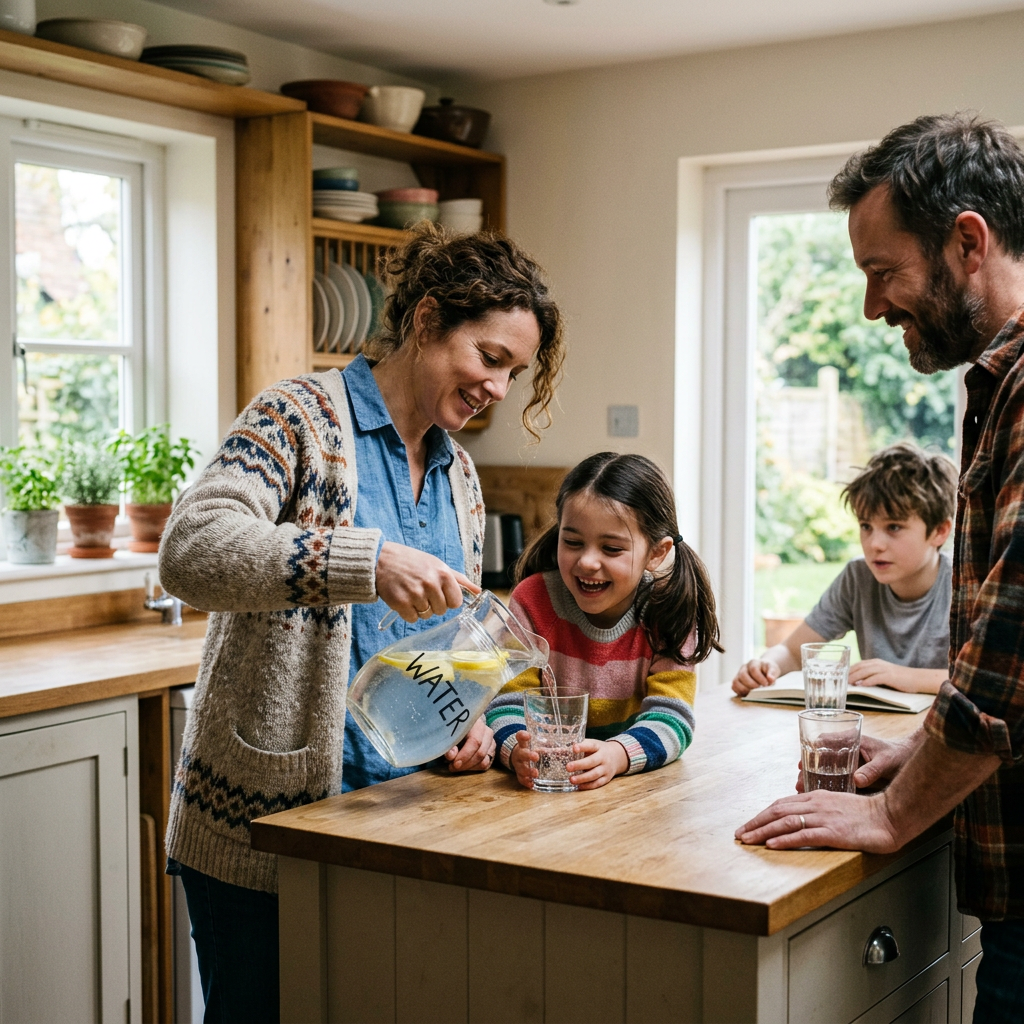
Kids learn drink habits the same way they learn most things: by watching what shows up in the house, what gets offered first, what gets treated like a reward, and what becomes part of the normal routine.
That is why water, juice, soda, sports drinks, flavored drinks, and other sweet drinks should not all live in the same mental bucket. To a child, a drink is a drink until a parent teaches the difference. Water is the everyday default. Juice is occasional. Treat drinks are exactly that: treats.
The goal is not to make kids afraid of juice, obsessed with labels, or convinced every birthday party is a moral crisis. The goal is simpler. Help them understand that water is what the body needs most often, while sweet drinks belong in smaller, more intentional moments.
Start With the Default Drink
Every household has a default whether parents name it or not. If water is visible, easy to reach, and served often, water becomes normal. If juice boxes, soda, sports drinks, and flavored drinks are always easier to grab, those become normal instead.
Kids do not need a lecture every time they are thirsty. They need a pattern. Water with meals. Water after school. Water before sports. Water after playing outside. Water on the table. Water in the kitchen. Water ready when they get home.
Distilled water in reusable glass bottles and glass jugs helps families build that default at home. It gives the household a clean water source for drinking, filling cups, preparing meals, and setting up daily routines without making water feel like the backup option.
Explain Water in Kid-Friendly Terms
Kids do not need a technical breakdown of hydration. They need language that makes sense. Water is the drink your body uses every day. Water helps you play, think, eat, sleep, run, and recover. Water is not a prize. It is not a punishment. It is the everyday drink.
You can explain it in simple categories: water is for everyday thirst, juice is for sometimes, and treat drinks are for special moments. That framing gives children structure without turning every drink choice into a fight.
The important part is consistency. If water is described as the everyday drink but never actually served as the everyday drink, kids will notice. Children are tiny lawyers with snack crumbs on their shirts. They see the gap between the speech and the system.
Juice Is Not the Same as Water
Juice can feel like a healthy choice because it comes from fruit or has fruit on the container. But juice is not the same as water, and it should not be treated as a replacement for water throughout the day.
That does not mean juice has to disappear from the house forever. It means juice should have a role. Maybe it belongs with breakfast sometimes. Maybe it is part of a weekend meal. Maybe it is offered at parties, picnics, or family events. The exact rhythm depends on the household.
What matters is that children learn the difference. Water is the daily base. Juice is an occasional drink. If juice shows up every time a child says they are thirsty, the lesson becomes clear fast: thirst means sweet.
“Treat Drinks” Need a Clear Place
Soda, sugary sports drinks, sweet teas, lemonade, frozen drinks, fancy coffee-style drinks, and colorful novelty beverages are easy for kids to understand when parents call them what they are: treat drinks.
That phrase helps because it removes the drama. A treat drink is not evil. It is not an everyday water replacement either. It belongs at parties, celebrations, special outings, restaurants, movie nights, or other moments where treats already make sense.
This gives parents a cleaner way to say no without turning every answer into a courtroom argument. “That is a treat drink, and we are having water right now” is much easier than launching into a full nutrition seminar in the kitchen while everyone is tired.
Make Water the Easy Family Default
Distilled Fulfilled delivers clean distilled water in reusable glass bottles and glass jugs, making it easier to keep better water ready for family meals, school routines, sports days, weekend outings, and everyday hydration at home.
Shop distilled water in glass bottles or contact Distilled Fulfilled to set up a refill routine that keeps your household stocked.
Put Water Where Kids Can See It
Visibility changes behavior. If kids can see water, reach water, and watch adults choose water, it becomes part of the household rhythm.
Keep water ready at the table. Keep a glass jug or glass bottle available in the kitchen. Pour water before meals begin. Offer water when kids come inside from playing. Make water part of the after-school reset before snacks take over the conversation.
This does not mean children need unlimited access to every glass item in the house. Parents should choose setups that match the child’s age and safety needs. At home, glass bottles and glass jugs can serve as the clean family supply, while parents pour into the right cup or child-safe drinkware as needed.
Use Meals to Teach the Pattern
Meals are one of the easiest places to teach the difference between everyday drinks and occasional drinks. Water with lunch and dinner sets a simple expectation. Juice can be occasional. Treat drinks can be saved for special meals or events.
The table does a lot of teaching. If water is always present, kids learn that water belongs with food. If sweet drinks always show up first, kids learn that meals are supposed to come with sweetness.
Parents do not have to make it weird. Just serve water consistently. The less dramatic the routine feels, the more normal it becomes.
Stop Making Water the Boring Punishment
One reason kids resist water is that adults sometimes present it like a downgrade. “No, you cannot have juice. You have to drink water.” That framing teaches kids that water is the sad option you get when fun has been denied.
Instead, make water the normal option before anyone asks for something else. Pour it first. Serve it cold when that helps. Use clean-tasting water. Keep the setup consistent. Make water feel expected, not punitive.
Distilled water can help because taste matters. If water tastes clean, kids are more likely to accept it as part of the routine. If water tastes stale, metallic, heavily mineral, or like old refrigerator filter drama, nobody should be shocked when kids push back.
Give Kids Simple Choices Within the Water Routine
Kids like choices, but not every choice needs to be wide open. Instead of asking, “What do you want to drink?” every time, try offering choices inside the water routine.
Cold water or room temperature water. Big glass or small glass. Water before snack or water with snack. Water at the table or water on the porch. These small choices give kids some control while keeping water as the default.
This works better than opening the entire drink category for debate. Once every option is on the table, water has to compete against sugar, color, packaging, novelty, and marketing. That is not a fair fight, and everyone knows it.
Model the Habit Without the Speech
Children notice what adults do. If parents say water matters but mostly drink soda, coffee, sweet tea, or flavored drinks all day, the message gets muddy. Kids are very skilled at detecting hypocrisy, usually right after learning how to spill something expensive.
Adults do not need to be perfect. They just need to make water visible in their own routines. Keep a glass of water at the desk. Drink water with meals. Use a glass bottle in the kitchen. Pour water after errands, workouts, or outdoor time.
The goal is to make water look like part of normal adult life, not something adults force on children while quietly doing something else.
Use Sweet Drinks Intentionally
The more random sweet drinks are, the harder they are to manage. If a child gets juice sometimes for breakfast, sometimes after school, sometimes after sports, sometimes before bed, and sometimes because they asked loudly enough, the pattern becomes negotiation.
A better approach is to choose the moments ahead of time. Juice with Saturday breakfast. Lemonade at a picnic. Soda at a birthday party. A sports drink only for certain long or hot activity days, depending on the family’s choice. Treat drinks become easier to understand when they have a place.
That structure also helps parents. You are not inventing the rule from scratch every time. You are pointing back to the household pattern.
Keep the Home Supply Stocked
A water-first household needs water that is actually available. If the family keeps running out, the default breaks. Suddenly juice is easier. Soda is easier. Buying random drinks while out is easier. The system collapses because the supply was not ready.
Distilled Fulfilled’s reusable glass bottle and glass jug refill system helps families keep clean water stocked at home. Full bottles and jugs come in. Empty bottles and jugs go back. The routine stays organized without turning the house into a pile of disposable water packaging.
For families, that matters. Kids, meals, school mornings, sports days, guests, cooking, appliances, and outings all pull from the same household rhythm. The water supply has to match the real use.
A Simple Family Drink Language System
- Water: the everyday drink for thirst, meals, school routines, sports, and home life.
- Juice: a sometimes drink, not a replacement for water all day.
- Treat drinks: special drinks for parties, outings, restaurants, celebrations, or chosen treat moments.
- Parent choice: the household decides when each category makes sense.
- Visible routine: water stays easy to see, pour, and serve at home.
A Simple Water-First Checklist for Families
- Serve water with everyday meals.
- Offer water before juice or treat drinks when kids are thirsty.
- Keep clean distilled water visible in the kitchen.
- Use simple language: water, juice, and treat drinks.
- Let kids make small choices inside the water routine.
- Save sweet drinks for clear, intentional moments.
- Model drinking water without turning it into a lecture.
- Restock the home supply before the routine breaks.
Build a Cleaner Water Routine for the Whole Family
Distilled Fulfilled helps families keep clean distilled water ready in reusable glass bottles and glass jugs, with delivery and refill options that support meals, school days, sports, outings, and everyday home routines.
Order distilled water in glass bottles and make water the easy default in your home.
Final Sip
Teaching kids the difference between water, juice, and treat drinks does not require fear, guilt, or a nutrition lecture nobody asked for. It requires clear language and a consistent home routine.
Water is the everyday drink. Juice is occasional. Treat drinks are for treat moments. Keep clean distilled water visible, serve it often, and make it part of normal family life. When the house is set up properly, kids do not just hear that water matters. They see it every day.
Leave a Reply