
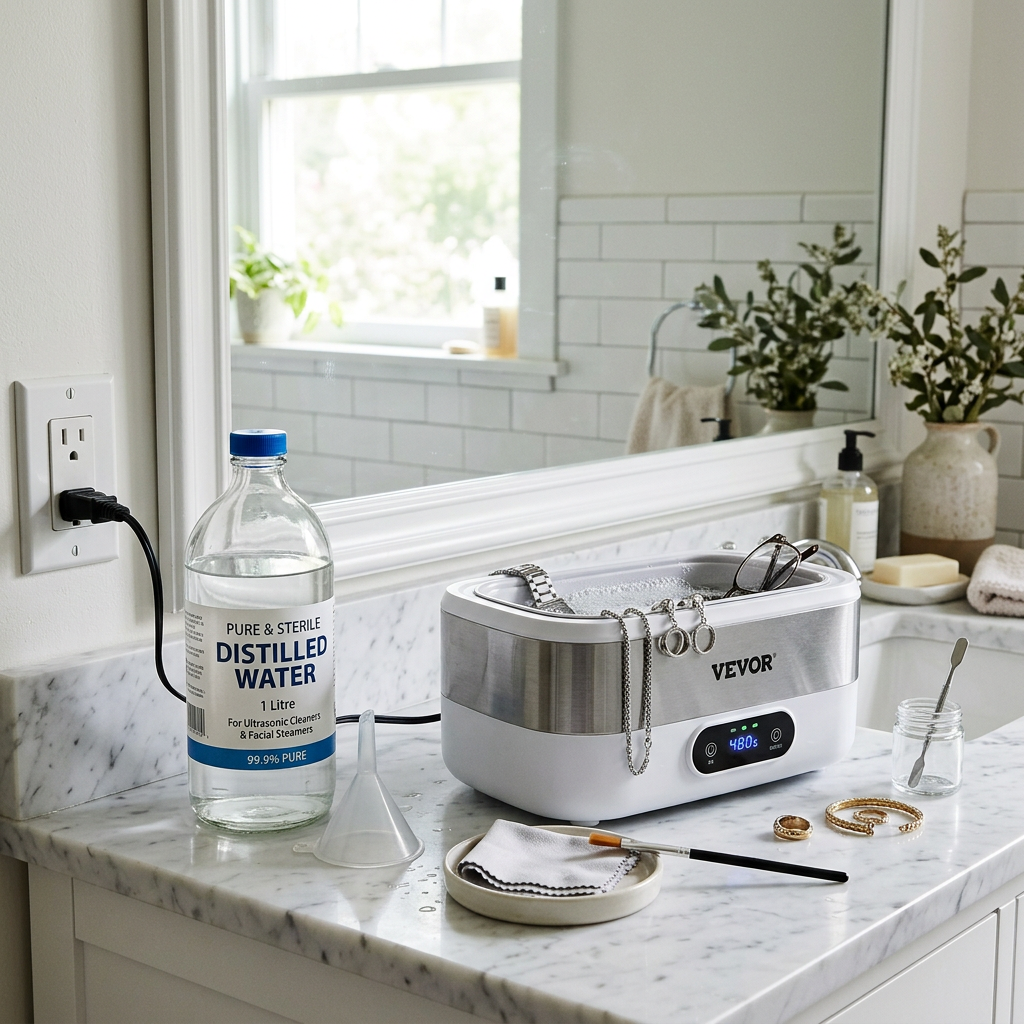
Ultrasonic cleaners look like one of those small devices that should be simple. Add water, press a button, let the little machine buzz away, and suddenly jewelry, eyeglasses, small tools, and tiny parts are supposed to come out looking cleaner.
Sometimes they do. Sometimes the results are underwhelming. Sometimes the problem is the item, the cleaner, the cycle time, the solution, or the fact that someone tossed in something that absolutely should not have gone in there.
But one part of the routine gets overlooked constantly: the water. Ultrasonic cleaners rely on liquid to do the work. That means water quality can affect the cleaning experience, especially when you are trying to avoid mineral residue, cloudy drying, or inconsistent results.
Distilled water gives ultrasonic cleaning routines a cleaner, low-mineral baseline. It will not make every item safe to clean, and it will not replace the manufacturer’s instructions, but it can help make the water side of the process more predictable.
How Ultrasonic Cleaners Use Water
Ultrasonic cleaners use sound waves to create tiny bubbles in the cleaning liquid. Those bubbles help loosen dirt, oils, dust, and residue from surfaces and small crevices. That is why these machines are popular for jewelry, eyeglasses, watch bands, small metal parts, grooming tools, and certain household items.
The liquid in the tank matters because it is the medium doing the work. If the water contains minerals, has a strong smell, leaves spots, or dries cloudy, that can affect the final result. A cleaner may loosen debris beautifully, only for the item to dry with water spots or residue from the rinse.
Distilled water helps by starting with a low-mineral base. That makes it useful for the tank, the rinse, or the final wipe when the item and device instructions allow it.
Start With the Manual, Not the Vibe
Before using an ultrasonic cleaner, read the instructions for the machine and the item you want to clean. This matters. Ultrasonic cleaning is useful, but it is not safe for everything.
Some jewelry, stones, coatings, adhesives, lenses, electronics, watch heads, delicate finishes, and specialty materials can be damaged by ultrasonic cleaning. Certain eyeglass lenses or coatings may also require specific care. The fact that something fits inside the tank does not mean it belongs in the tank.
Distilled water is a cleaner water choice, not a permission slip to clean anything with confidence and chaos. The manual wins. The item’s care instructions win. If you are unsure about valuable jewelry, glasses, watches, or delicate parts, check with a professional first.
Why Distilled Water Makes Sense
Distilled water is low in minerals, which makes it helpful when you want fewer spots, less residue, and a cleaner finish. In an ultrasonic cleaner, that can matter because many items have small grooves, edges, hinges, links, screws, or decorative areas where water can sit before drying.
Tap water may work for some basic cleaning tasks, but if it leaves mineral spots on fixtures, glass, appliances, or dishes, it can leave evidence here too. Distilled water reduces that variable.
That is especially useful for small items where the whole point is detail. Jewelry links, eyeglass nose pads, small tool edges, and watch bands can all hold onto residue. Starting with cleaner water gives the routine a better foundation.
Jewelry: Useful, but Not Universal
Ultrasonic cleaners can be useful for certain jewelry, especially items with metal links, settings, and small crevices that collect lotion, skin oils, dust, and daily grime. But jewelry is also one of the easiest categories to get wrong.
Not all stones should go into an ultrasonic cleaner. Not all settings are secure enough. Not all finishes are safe. Some pieces may have glue, treatments, cracks, softness, or delicate details that make ultrasonic cleaning risky.
Use distilled water when the jewelry is safe for ultrasonic cleaning and the cleaner instructions allow it. For valuable, sentimental, antique, or delicate pieces, get professional guidance first. No one needs to learn a lesson about heirloom jewelry from a countertop device with a timer.
Keep Low-Mineral Water Ready for Small Home Devices
Distilled Fulfilled delivers clean distilled water in reusable glass bottles and glass jugs, making it easier to keep low-mineral water ready for ultrasonic cleaners, appliance care, beauty tools, glass cleaning, floor machines, cooking, and everyday hydration.
Shop distilled water in glass bottles or contact Distilled Fulfilled to set up a refill routine that keeps your home stocked.
Eyeglasses: Be Careful With Coatings
Eyeglasses are another common ultrasonic cleaner use case, but they need caution. Frames, screws, nose pads, and hinges can collect oils and grime, but lenses may have coatings that require specific care.
Before placing eyeglasses in an ultrasonic cleaner, check the guidance from your optician, lens manufacturer, or frame manufacturer. Some lenses or coatings may not be suitable for ultrasonic cleaning. Some frames may have materials or finishes that do not respond well to soaking or vibration.
If ultrasonic cleaning is approved, distilled water can help reduce mineral residue during the cleaning or rinsing step. Finish with a clean microfiber cloth and avoid harsh products unless they are specifically approved for your lenses.
Small Parts and Household Items
Ultrasonic cleaners can also be useful for certain small metal parts, grooming-tool attachments, removable hardware, small tools, hobby parts, and other items with tiny crevices. This is where the device can shine because it can reach areas that are annoying to scrub by hand.
Use common sense before placing anything in the tank. Avoid electronics unless the manufacturer specifically says ultrasonic cleaning is safe. Be careful with painted parts, glued parts, coated finishes, soft materials, and anything that could trap water internally.
Distilled water helps keep the process cleaner, especially when you are rinsing or drying small parts that would otherwise show spots. Dry parts thoroughly before storing or reassembling them.
Cleaning Solution Still Matters
Some ultrasonic cleaning routines use plain water. Others call for a specific cleaning solution. Some items require a mild cleaner. Some should not be exposed to certain chemicals at all.
Follow the instructions for your machine and the item being cleaned. Do not add random soaps, oils, vinegar, bleach, alcohol, or household cleaners to the tank unless the instructions clearly allow it. The wrong additive can damage the machine, the item, or both.
Distilled water is the base. It is not a substitute for the right solution when the process calls for one. It is also not an excuse to create a tiny countertop chemistry experiment because the internet made it sound easy.
The Rinse and Dry Step Is Where People Get Lazy
Running the ultrasonic cycle is only part of the routine. After cleaning, many items still need to be rinsed, wiped, or dried properly. This is where distilled water can be especially useful.
A distilled-water rinse can help reduce mineral spots after cleaning. A clean microfiber cloth can help finish the item without adding lint or scratches. For small parts, drying matters even more because water can hide in tiny spaces.
Do not put damp items away and call it done. Moisture trapped in hinges, links, screws, crevices, or tool parts can create new problems. Cleaning should end with the item dry, not just wet and optimistic.
Keep the Tank Clean
The ultrasonic cleaner itself needs maintenance. Dirty water, loosened debris, oils, and residue can build up in the tank. If the tank is dirty, the cleaning routine starts losing its point.
Empty the tank after use according to the manufacturer’s instructions. Wipe it down as directed. Do not let dirty water sit in the machine for days. Do not store the device with old cleaning solution inside it.
Using distilled water can help reduce mineral buildup, but it does not eliminate the need to clean the machine. Better water supports better maintenance. It does not replace it.
Use Glass Bottles and Glass Jugs for a Cleaner Setup
A small device like an ultrasonic cleaner works better when the whole setup is organized. Keep distilled water nearby in a reusable glass bottle or glass jug. Keep clean microfiber cloths, approved cleaning solution, and a small drying area together.
Glass bottles and glass jugs fit the routine because they look clean, store well, and avoid turning a practical station into a pile of disposable packaging. They also support the rest of the home, from appliance care to glass cleaning to beauty tools and daily hydration.
Distilled Fulfilled’s refill system helps keep the supply moving. Full glass bottles and glass jugs come in. Empty glass bottles and glass jugs go back. The water stays stocked without adding more clutter to the cabinet.
A Simple Ultrasonic Cleaner Checklist
- Read the ultrasonic cleaner manual before use.
- Confirm the item is safe for ultrasonic cleaning before placing it in the tank.
- Use distilled water when a low-mineral base makes sense.
- Use only approved cleaning solutions or additives.
- Be careful with jewelry, lenses, coatings, adhesives, electronics, and delicate finishes.
- Rinse with distilled water when appropriate to reduce mineral spots.
- Dry items thoroughly before storage or reassembly.
- Empty and clean the tank after use according to the manufacturer’s instructions.
- Keep distilled water stocked in reusable glass bottles or glass jugs near the cleaning area.
Make Small-Device Care Cleaner and Easier
Distilled Fulfilled helps keep clean distilled water ready in reusable glass bottles and glass jugs, with delivery and refill options designed for real home routines. Use it for ultrasonic cleaners, appliance care, vanity tools, glass cleaning, floor machines, kitchen prep, and the everyday systems that work better with low-mineral water.
Order distilled water in glass bottles and keep better water ready for the small routines that need it.
Final Sip
Ultrasonic cleaners can be useful for jewelry, eyeglasses, small parts, and household tools, but the routine still needs care. The item has to be safe. The machine has to be used correctly. The cleaning solution has to be appropriate. The rinse and dry steps still matter.
Distilled water gives ultrasonic cleaning a cleaner, low-mineral base. It can help reduce residue, improve consistency, and make final rinses feel more controlled. Keep it stocked in reusable glass bottles and glass jugs, follow the instructions, and let better water support a cleaner home-care system.
Leave a Reply