
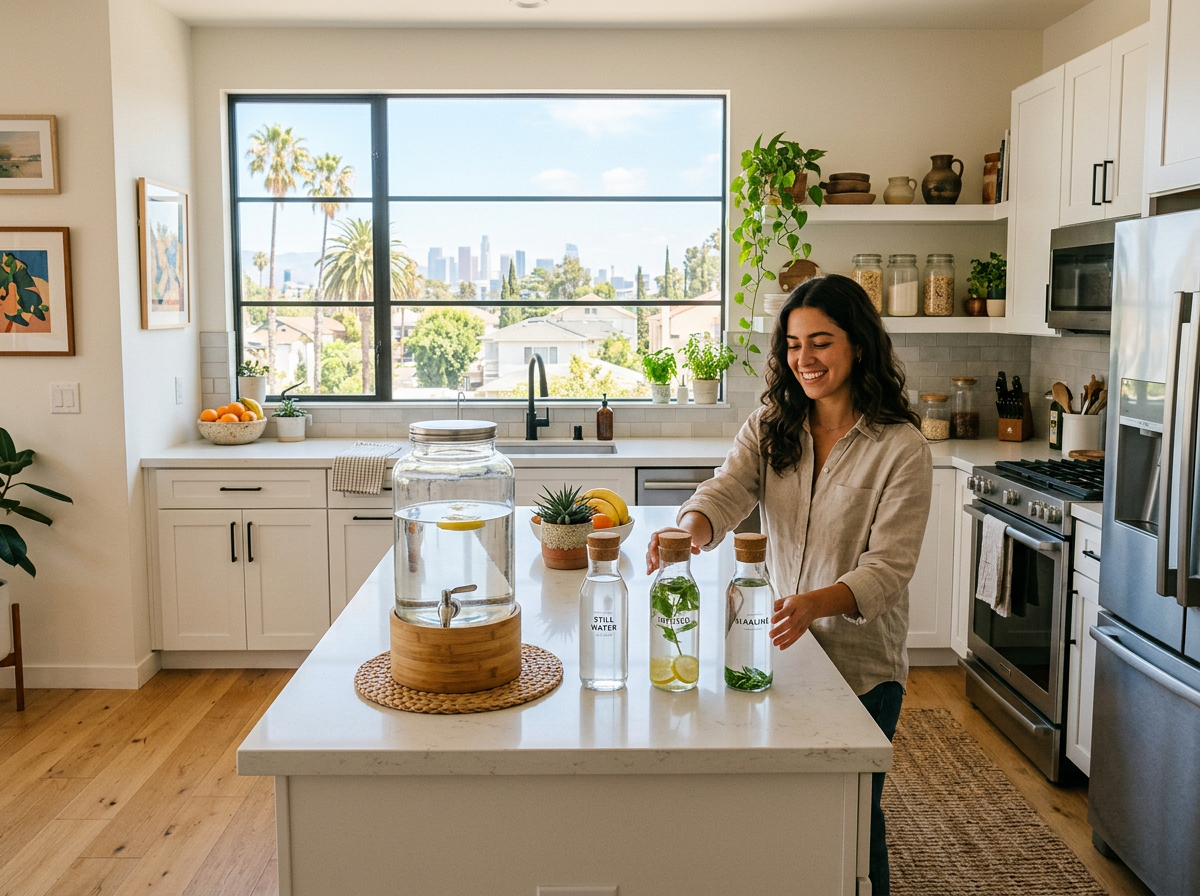
Los Angeles apartment living has a way of turning every square foot into a negotiation. The closet is full. The kitchen cabinets are doing their best. The hallway has opinions. The balcony, if you have one, is already trying to be a garden, storage unit, and emotional support patio at the same time.
So when someone says, “You should keep extra water at home,” the idea sounds smart until you look around and ask the obvious question: where?
Apartment water storage needs a different plan than a garage, pantry, or suburban utility room. It has to be compact, clean, easy to rotate, and realistic for the way people actually live in Los Angeles. Distilled water in reusable glass bottles and glass jugs can fit that system well because it gives you cleaner water without building a wall of disposable plastic packaging in the corner of your apartment.
Why Apartment Water Storage Needs a System
Water storage sounds simple until it starts taking over the wrong places. A random bottle here, a jug there, a case shoved under the table, another one near the door, and suddenly your apartment looks like you are preparing for a very boring apocalypse.
The goal is not to hoard water. The goal is to keep enough clean water on hand for real daily use, small disruptions, guests, cooking, coffee, appliances, and the moments when running out becomes inconvenient.
A good apartment system answers four questions: where does full water live, where do empties go, how often does it get used, and when does it get refilled? Once those questions are answered, water storage stops feeling like clutter and starts functioning like part of the home.
Start With the Kitchen, Not the Closet
For most apartments, the kitchen should be the first water zone. That is where drinking, cooking, coffee, tea, baking, meal prep, and appliance routines usually begin. If the water is too far from the kitchen, you are less likely to use it consistently.
Use a clean section of counter, pantry shelf, lower cabinet, or rolling cart for your active water supply. Keep one glass bottle or glass jug easy to reach and store the backup supply nearby if space allows.
The key is access. Water you use every day should not be buried behind holiday platters, old grocery bags, or the appliance you bought during a burst of optimism and have not touched since.
Use Vertical Space Carefully
Small apartments reward vertical thinking, but water is heavy. That means storage needs to be safe, stable, and realistic. Do not stack glass bottles or glass jugs in unstable towers. Do not place heavy water on flimsy shelves. Do not store glass where it can slide, tip, or get knocked over in a tight walkway.
Lower shelves, sturdy carts, floor-level pantry zones, and stable cabinets are usually better than high shelves. If you use a cart, make sure it can handle the weight and stays parked in a safe place.
Apartment storage should make life easier, not create a physics problem next to the refrigerator.
Think in Zones: Active, Backup, and Return
A clean apartment water system has three zones. The active zone is the bottle or jug you are currently using. The backup zone is the extra supply waiting to be opened. The return zone is where empty glass bottles and glass jugs go until pickup, refill, or return.
This simple structure prevents clutter. Full bottles do not get mixed with empties. Empties do not drift around the kitchen. Backup water does not disappear into a closet and get forgotten.
In a small apartment, the return zone might be a dedicated crate, lower cabinet, pantry corner, or entryway area. It does not need to be large. It just needs to be consistent.
Build a Cleaner Apartment Water Routine
Distilled Fulfilled delivers clean distilled water in reusable glass bottles and glass jugs, making it easier to keep better water ready for Los Angeles apartment living, kitchen routines, hydration, cooking, coffee, cleaning, and refill systems that do not rely on disposable plastic cases.
Shop distilled water in glass bottles or contact Distilled Fulfilled to set up a refill routine that fits your apartment.
Choose Bottle Sizes Based on Space, Not Fantasy
The best water size is the one your apartment can actually support. A larger glass jug may be useful if you cook often, drink a lot of water, host guests, or use distilled water for appliances and cleaning. Smaller glass bottles may be easier if your kitchen is tight, your cabinet space is limited, or you prefer a more distributed setup.
Do not choose based only on what sounds efficient. Choose based on where the bottle or jug will live, how often you will use it, and how easy it will be to move safely.
In small spaces, convenience matters. If a bottle is too awkward to access, it will get ignored. If a jug blocks a cabinet, it will become annoying. The right setup should feel like part of the apartment, not an obstacle course.
Use the Refrigerator Strategically
Cold water is useful, but refrigerator space in an apartment is precious. You do not need to chill every bottle or jug at once. Instead, keep one active bottle chilled and store backup water at room temperature in a clean, stable area.
This gives you cold water when you want it without sacrificing half the refrigerator. It also keeps the larger supply from competing with groceries, leftovers, and the container of something everyone is pretending not to see.
For households that drink cold water often, rotate one bottle into the refrigerator as another comes out. Simple rotation keeps the cold supply ready without overcrowding the fridge.
Keep Water Away From Heat and Household Chemicals
Apartment storage sometimes forces strange compromises, but water should still be stored thoughtfully. Keep glass bottles and glass jugs away from direct sunlight, heaters, hot appliances, cleaning chemicals, laundry products, strong odors, and unstable surfaces.
Do not store drinking water under a sink next to harsh cleaners unless the setup is properly separated and safe. Do not leave bottles where they can be kicked, bumped, or warmed by a window all afternoon.
Clean water deserves clean storage. That is not fancy. That is basic household order.
Make Guest Water Easy
Apartment hosting can be tight, but water should still be easy to offer. Keep one glass bottle chilled before guests arrive and one room temperature bottle available near the kitchen, dining table, or counter.
This small detail makes the apartment feel more prepared. Nobody has to ask where the water is. Nobody has to watch you dig through the refrigerator. Nobody has to drink from a random bottle that has been rolling around behind the condiments.
Reusable glass bottles also look polished enough to place on the table or counter. That matters in a small space, where every visible item affects how the apartment feels.
Use Water Storage for More Than Drinking
Apartment water storage becomes more valuable when it supports multiple routines. Distilled water can be useful for drinking, cooking, coffee, tea, baking, glass cleaning, garment steamers, humidifiers, beauty routines, and certain small appliances when the manufacturer recommends it.
That does not mean one bottle should be dragged all over the apartment all day. It means your water supply should be sized for real use. If distilled water is part of your kitchen, cleaning, appliance, and hydration routines, plan enough so the system does not run out constantly.
A good refill rhythm is what turns water storage from clutter into infrastructure.
Plan for Short Disruptions
Los Angeles apartment life can come with building maintenance, plumbing work, surprise shutoffs, elevator issues, construction, heat waves, and the occasional notice taped near the mailboxes that somehow explains everything and nothing at once.
Keeping extra water at home helps when the normal routine gets interrupted. You do not need to panic-buy or overfill your apartment. You just need a reasonable backup supply that fits your household and your space.
For apartment dwellers, the best emergency plan is usually the one that also supports daily life. Water that gets used and rotated is easier to manage than water shoved into a closet and forgotten until it becomes a weird artifact.
Make Rotation Simple
Water rotation should not require a spreadsheet. Use the oldest bottle or jug first. Put newer bottles behind or under the current supply. Keep empties in one return zone. Restock before the backup zone disappears.
If you live alone, your refill rhythm may be slower. If you have roommates, a partner, kids, pets, guests, or a heavy cooking routine, your rhythm may need to be faster. The system should match the household, not a generic recommendation.
The easiest rule is simple: when the backup supply gets low, reorder or schedule refills before the active bottle runs out.
A Simple Apartment Water Storage Checklist
- Create three zones: active, backup, and return.
- Store heavy glass bottles and glass jugs on stable lower shelves or safe floor-level spaces.
- Keep one bottle chilled instead of overcrowding the refrigerator.
- Store backup water away from heat, sunlight, chemicals, and strong odors.
- Use the oldest bottle or jug first so rotation stays simple.
- Choose bottle and jug sizes based on your actual apartment layout.
- Keep empties in one consistent return area.
- Restock before your backup zone is gone.
- Use water storage to support drinking, cooking, cleaning, appliance care, and guest routines.
Set Up Better Water for Your Los Angeles Apartment
Distilled Fulfilled helps keep clean distilled water ready in reusable glass bottles and glass jugs, with delivery and refill options designed for real homes, apartments, kitchens, and small-space routines in Los Angeles.
Order distilled water in glass bottles and build an apartment water system that actually fits your space.
Final Sip
Apartment water storage in Los Angeles does not need to look like a warehouse aisle. It needs a simple system: active water, backup water, and a return zone for empty glass bottles and glass jugs.
Use your kitchen as the starting point. Store bottles safely. Keep one chilled. Rotate the supply. Restock before you run out. With Distilled Fulfilled, small-space water storage can feel cleaner, more polished, and much easier to maintain.
Leave a Reply