
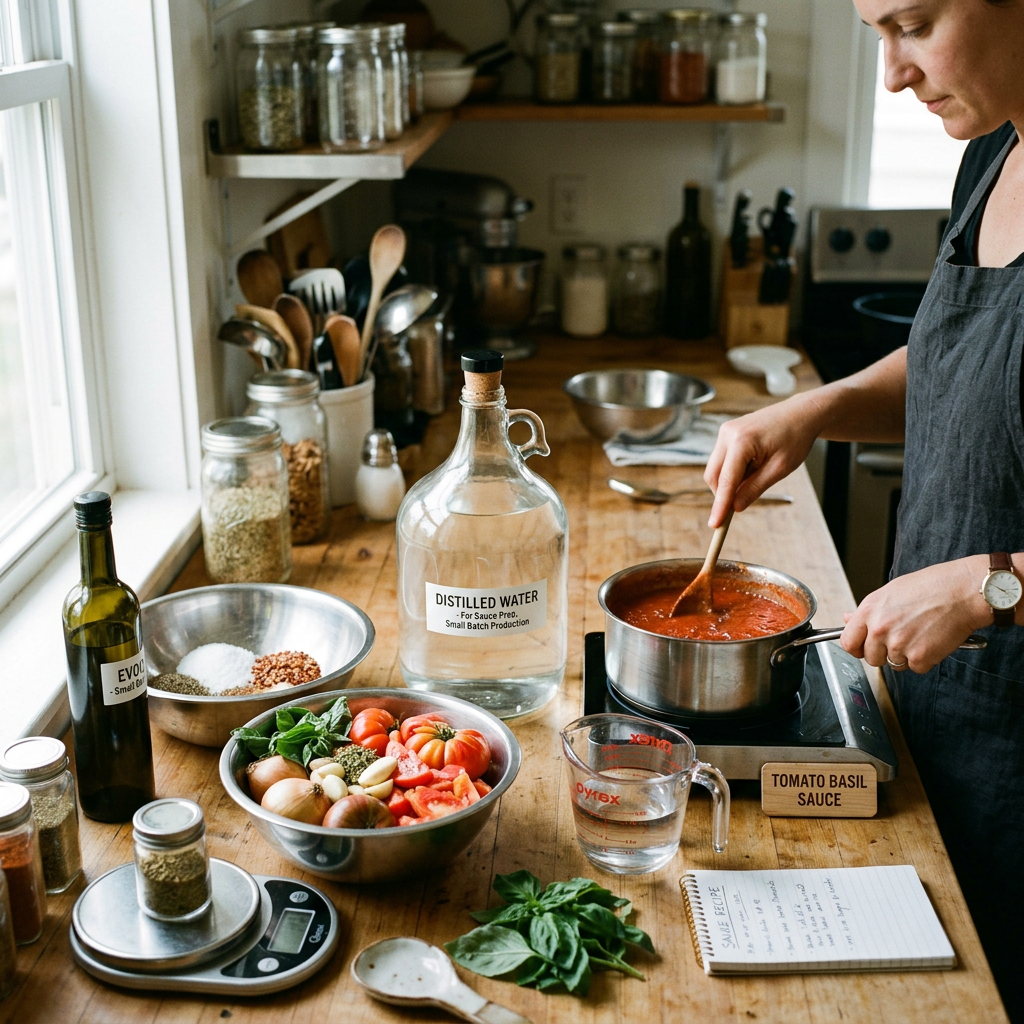
Small-batch kitchen prep is where tiny details start acting very important. A spoonful of syrup. A half-cup of sauce. A little reduction for drinks, desserts, coffee, tea, fruit, pancakes, marinades, glazes, or weekend hosting. The batch may be small, but the flavor has nowhere to hide.
That is why water quality matters more than people think. When you are making a large pot of soup, a little water character may get buried under vegetables, herbs, salt, fat, and time. When you are making a delicate simple syrup, citrus glaze, fruit reduction, tea concentrate, herb syrup, or small sauce, the water becomes part of the flavor structure.
Distilled water gives small-batch prep a clean, low-mineral baseline. It lets the ingredients you chose do the talking instead of forcing the recipe to work around mineral taste, pipe taste, refrigerator taste, or stale storage flavor.
Why Small Batches Expose Water Quality
Small batches are less forgiving because every ingredient has more influence. If the water tastes off, the final result may taste off. If the water is mineral-heavy, the syrup, sauce, or reduction may carry that background flavor. If the water smells treated or stale, the recipe may feel less clean even when everything else is fresh.
This is especially true with light flavors. Lemon, mint, cucumber, berry, peach, vanilla, ginger, tea, honey, basil, lavender, and citrus all depend on a clean base. A heavy water flavor can flatten the result or make it taste less precise.
Distilled water helps by removing one variable. When the water is clean and neutral, you can focus on sweetness, acidity, herbs, fruit, salt, texture, and timing.
Simple Syrups Need a Clean Start
Simple syrup sounds impossible to mess up. Water and sugar. Heat, dissolve, cool. Done. Then you use it in iced coffee, tea, cocktails, mocktails, lemonade, fruit, desserts, or breakfast, and suddenly the base flavor matters.
Using distilled water for simple syrup keeps the syrup clean and predictable. That is especially useful if you are making flavored syrups with herbs, citrus peel, berries, ginger, vanilla, or spices. The water should carry the flavor, not compete with it.
For best results, use clean equipment, dissolve the sugar fully, cool the syrup properly, and store it in a clean glass container. Small-batch syrup should feel fresh and intentional, not like something that picked up every flavor in the refrigerator.
Fruit Reductions Depend on Balance
Fruit reductions can be simple and impressive when they are done well. Berries, stone fruit, citrus, apples, pears, cherries, and tropical fruit can all be cooked down into sauces for desserts, pancakes, yogurt, sparkling water, mocktails, glazes, or savory dishes.
When water is part of that process, distilled water gives the fruit a cleaner stage. That matters because fruit reductions rely on balance: sweetness, acidity, concentration, and texture. A strange water flavor can make the final sauce feel dull or muddy.
Use just enough water to help the fruit cook evenly, then let time and heat concentrate the flavor. Do not drown the fruit. The goal is a focused reduction, not fruit taking a bath with ambition.
Tea, Coffee, and Herb Concentrates
Small-batch concentrates are useful for drinks, desserts, and hosting. Strong tea concentrate can become iced tea, mocktails, syrups, sauces, or dessert components. Coffee concentrate can support desserts, glazes, and cold drinks. Herb concentrates can add flavor to water, sparkling drinks, fruit, or sauces.
Water quality matters here because tea, coffee, and herbs are sensitive. If the water has a strong taste, the concentrate may pick it up. Distilled water creates a clean base that lets the ingredient show up more clearly.
Pay attention to steeping time and temperature. Better water helps, but oversteeped tea will still taste oversteeped. Burnt coffee will still taste burnt. Mint left too long can become aggressive enough to need its own parking space.
Give Small-Batch Prep a Cleaner Starting Point
Distilled Fulfilled delivers clean distilled water in reusable glass bottles and glass jugs, making it easier to keep better water ready for sauces, syrups, reductions, cooking, baking, coffee, tea, sparkling water, and everyday kitchen routines.
Shop distilled water in glass bottles or contact Distilled Fulfilled to set up a refill routine that keeps your kitchen stocked.
Reductions Need Patience, Heat, and Good Water
A reduction is simple in theory. You simmer a liquid until some of the water evaporates and the flavor becomes more concentrated. In practice, reductions can go from thin to perfect to sticky chaos faster than people expect.
Using distilled water gives the process a cleaner baseline when water is part of the starting liquid. This is useful for fruit reductions, herb reductions, tea reductions, light glazes, and small sauces where you want a more controlled flavor.
Keep the heat moderate. Stir when needed. Taste as you go. Remember that the flavor will intensify as the liquid reduces. A sauce that tastes balanced at the beginning may become too sweet, too sharp, or too strong if reduced too far.
Small Sauces for Everyday Meals
Small sauces can make ordinary meals feel more complete. A quick citrus glaze for fish or vegetables. A ginger syrup for fruit. A light pan sauce. A tea-based drizzle. A berry sauce for breakfast. A herb-infused syrup for sparkling water. A little sauce can move a meal from “fine” to “somebody here planned this.”
Distilled water helps when the sauce needs a clean liquid base. It can be used to loosen, simmer, dissolve, steep, or reduce without adding extra mineral flavor. This is especially useful when the recipe is delicate or built around fresh ingredients.
The more subtle the sauce, the more the water matters. Big flavors can cover a lot. Small flavors tell the truth.
Use Glass Bottles and Glass Jugs for Prep
A small-batch kitchen routine works better when the water is easy to reach. Keep distilled water in reusable glass bottles or glass jugs near the kitchen prep area so measuring, simmering, steeping, and mixing do not require a last-minute search.
Glass fits the routine visually and practically. It looks clean on the counter, pours neatly, and avoids the disposable packaging clutter that can make a small kitchen feel crowded.
Distilled Fulfilled’s refill model supports repeatable kitchen use. Full glass bottles and glass jugs come in. Empty glass bottles and glass jugs go back. The water stays part of the kitchen system instead of becoming another errand.
Storage Matters After the Batch Is Done
Small-batch sauces and syrups need clean storage. Use clean glass containers, cool hot mixtures safely, and refrigerate when appropriate. Do not let a beautiful syrup sit out all day because it looked pretty on the counter. Pretty is not a food-safety plan.
Labeling and dating can help in real life, even when the featured image needs to stay text-free. At home, you want to know what the container holds and when you made it. Use the oldest batch first, and discard anything that smells, looks, or tastes questionable.
Small batches are best when they feel fresh. Make enough to use, store it cleanly, and rotate the next batch into the routine.
Where Distilled Water Helps Most
Distilled water is especially useful in recipes where clean flavor matters. Simple syrups, tea concentrates, herb syrups, citrus glazes, berry sauces, fruit reductions, mocktail bases, coffee syrups, and dessert drizzles can all benefit from a neutral water base.
It is also helpful when you are testing recipes. If you are trying to compare sweetness levels, steeping times, fruit ratios, or reduction timing, using the same distilled water each time removes one variable from the experiment.
That control is useful in a home kitchen. The more consistent the starting point, the easier it becomes to repeat the result.
Do Not Overcomplicate the System
Small-batch prep should make the kitchen feel more useful, not more stressful. Keep the setup simple: clean distilled water, clean glass containers, fresh ingredients, a small pot, a spoon, a strainer when needed, and a storage plan.
You do not need a professional kitchen to make better syrups and sauces. You need clean inputs and a repeatable process. That is where better water earns its place.
Once the water is handled, the rest becomes easier to refine. More citrus. Less sugar. Longer steep. Shorter simmer. Better fruit. Cleaner finish. The recipe becomes adjustable instead of mysterious.
A Simple Small-Batch Prep Checklist
- Use distilled water when clean, neutral flavor matters.
- Keep reusable glass bottles or glass jugs near the kitchen prep area.
- Use clean pots, spoons, strainers, and glass storage containers.
- Taste the mixture before and after reducing.
- Use moderate heat so reductions do not scorch or over-concentrate too quickly.
- Cool hot syrups and sauces safely before storing.
- Refrigerate small-batch sauces and syrups when appropriate.
- Make smaller amounts more often so the routine stays fresh.
- Restock distilled water before baking days, hosting, brunch, or summer drink prep.
Stock Better Water for Better Kitchen Prep
Distilled Fulfilled helps keep clean distilled water ready in reusable glass bottles and glass jugs, with delivery and refill options for real kitchen routines. Use it for syrups, sauces, reductions, baking, cooking, coffee, tea, sparkling water, and the everyday systems that work better with a cleaner water source.
Order distilled water in glass bottles and give your next small-batch recipe a cleaner place to start.
Final Sip
Small-batch sauces, syrups, and reductions are all about control. The fruit, herbs, tea, coffee, sugar, acid, heat, and timing all matter. Water belongs on that list too.
Distilled water gives petite prep routines a clean, low-mineral baseline that helps delicate flavors come through more clearly. Keep it stocked in reusable glass bottles and glass jugs, use clean tools, store finished batches properly, and turn small kitchen projects into repeatable wins.
Leave a Reply