
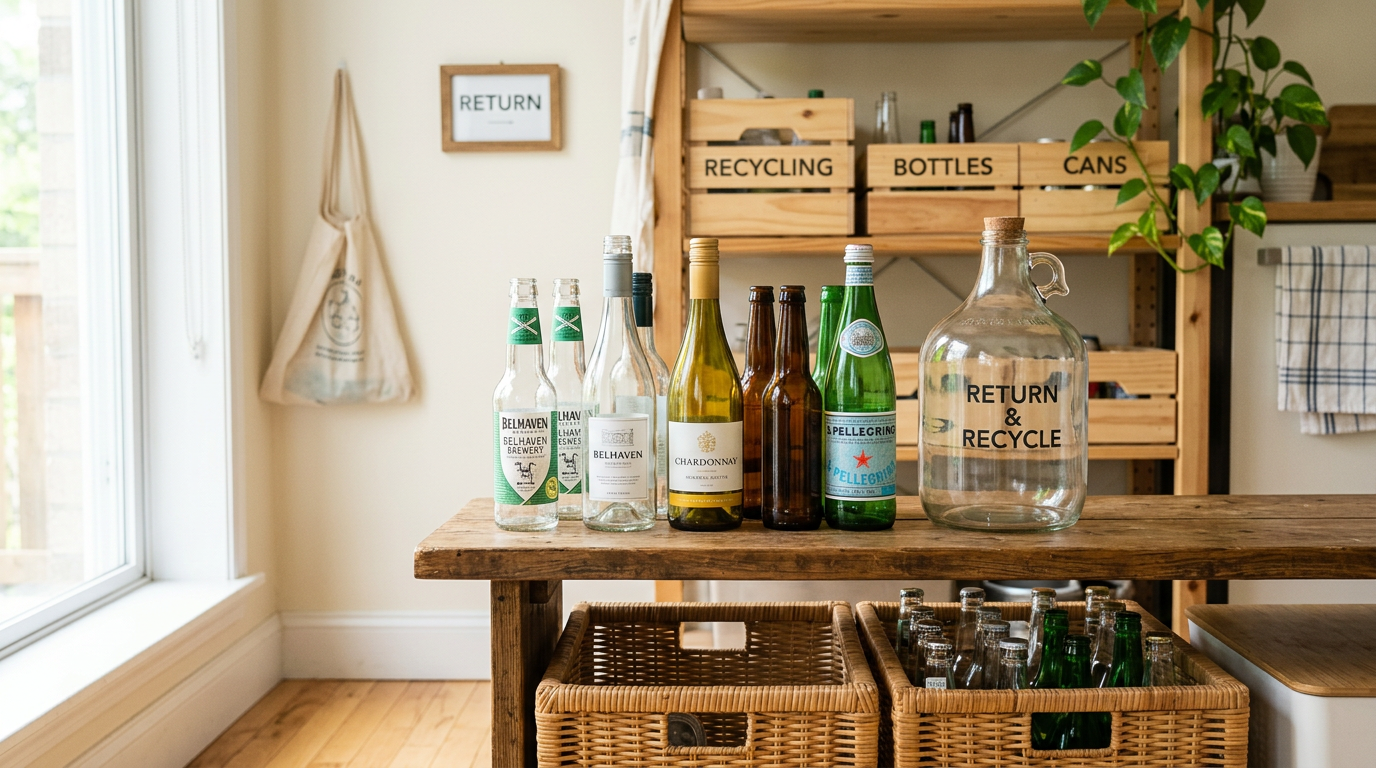
A reusable glass bottle system works best when everyone treats it less like trash day and more like a simple household rhythm. You enjoy clean, practical water delivery in durable glass, then those same bottles make their way back to the service operator for inspection, professional washing, sanitation, refill, closure, and quality control. That loop sounds straightforward because it is. The only trick is keeping the bottles in return-ready condition while they’re in your home.
If you are new to refill systems, “bottle return etiquette” may sound suspiciously formal for something that mostly involves not putting paint in a water jug. Fair enough. But a few small habits make a very real difference. They help keep your kitchen, pantry, garage, or apartment less cluttered, make handoff easier on delivery day, and help durable glass stay in circulation instead of being sidelined by avoidable damage or contamination.
For Distilled Fulfilled customers in the Los Angeles area, the appeal is practical: premium distilled water in reusable glass bottles and glass jugs, delivered in a format that helps people stop drinking plastic without making life complicated. Distilled water is a clean, low-mineral, neutral baseline. The bottle system around it should feel just as sensible.
This article is not a lecture, and nobody needs a gold star for returning an empty bottle. Think of it as a homeowner’s, renter’s, and small-space resident’s guide to making a reusable glass delivery system run smoothly. A little order on your end supports the closed loop on the provider’s end, and everybody gets a better experience.
What “Closed Loop” Means in Plain English
In plain English, a closed-loop bottle system means the container is meant to come back. Instead of using a bottle once and tossing it, the bottle returns to the service operator, where trained processes take over. The operator inspects it, determines whether it is fit to continue in circulation, cleans and sanitizes it according to its procedures, refills it, seals it, and sends it back out.
Your part of that loop is important, but it is also limited. You are not expected to perform industrial sanitation at home, diagnose microscopic flaws, or guarantee that every bottle will be reused. That is the provider’s job. Your role is simpler: return bottles empty, reasonably protected, and free from uses that can contaminate them or make them unsuitable for refill.
That distinction matters because reusable systems work best when customers know where their responsibility ends. Good return etiquette does not replace the operator’s quality controls. It supports them.
Why Returning Bottles Properly Helps More Than You Think
There are practical reasons to build a reliable return routine. First, it reduces clutter. Empty bottles have a talent for lingering in corners, on counters, and beside entryways like polite but very large houseguests. Second, it helps with efficiency. When empties are grouped and ready, exchange day takes less effort. Third, it helps preserve the bottles themselves. Glass is durable, but it is not invincible. A bottle that spends two weeks wobbling beside a laundry basket is more likely to get chipped than one stored intentionally in a stable spot.
There is also the larger point: reusable glass systems depend on bottles actually returning in usable condition. No need for dramatic speeches about the planet. The practical win is enough. Reuse reduces dependence on disposable plastic water containers and keeps durable containers moving through a refill system instead of sitting forgotten in the back of a closet.
Create a Dedicated Return Zone at Home
The easiest return habit is to remove decision-making from the process. Pick a dedicated return zone and use it every time. That could be one side of a pantry, a shelf in a laundry room, a protected corner of the kitchen, a mudroom nook, or a stable section of a garage that does not get excessively hot. In an apartment, it may be a slim space beside the refrigerator or a low cabinet area that is easy to access but not in the main traffic path.
The goal is not a Pinterest-worthy bottle shrine. The goal is consistency. When empty bottles always go to the same place, they are less likely to be bumped, repurposed, forgotten, or balanced in creative but ill-advised towers. A return zone also makes handoff simpler. On delivery or pickup day, you do not want to play a scavenger hunt involving three rooms and one mysterious bottle on the balcony.
If you are considering a home delivery routine and want the setup to feel easy from day one, it helps to shop Distilled Fulfilled’s distilled water in reusable glass bottles with a return spot already in mind. The smoother the home setup, the more natural the refill rhythm becomes.
Return Bottles Empty, Not “Almost Empty”
One of the simplest courtesies in any refill system is returning bottles empty. Not mostly empty. Empty. That keeps the handoff cleaner, lighter, and easier to manage. It also reduces the chance of stale water sitting in the bottle for long periods while the empty waits for return.
If a bottle still has water in it when your next delivery approaches, use it first if appropriate, or consolidate your drinking routine so returnables do not linger half-finished around the house. A consistent schedule helps. Many people find it useful to keep one active bottle or jug in use and move empties to the return zone immediately instead of letting them pile up in active living spaces.
Returning bottles empty is one of those habits that sounds obvious until you realize how often people intend to “finish that later” and then do not. Empty and set aside beats good intentions every time.
Keep Returnable Bottles for Water Only
This is the big one, and fortunately it is easy to remember: returnable water bottles should be used for water only. Not homemade cleaners, not fuel for a camp stove, not plant treatments, not cooking oils, not vinegar experiments, not fermented beverages, not garage mystery liquid that seemed like a good idea at the time.
Even strong-smelling but otherwise ordinary household substances can create problems. Oils can leave residue. Chemicals can create safety concerns. Paint and solvents can render a bottle unusable. Fermentation can introduce pressure, odors, residue, and risk. Household cleaners and plant chemicals can contaminate the container. Once a returnable bottle has been used for non-water purposes, it may no longer be suitable for a refill system.
This is one reason reusable glass water bottles are different from random jars you save for general household use. Returnable delivery bottles are part of a managed loop. They are not spare utility containers for every project under the sun. If you need containers for cleaners, garden solutions, or workshop materials, use purpose-made containers and follow the product label and safety instructions.
Protect Bottles From Contamination and Strong Odors
Contamination is not limited to obviously hazardous materials. Strong odors matter too. A bottle stored next to gasoline, solvents, harsh cleaners, paint thinner, or heavily scented chemicals is not being treated kindly, even if nothing was poured into it. Likewise, using a returnable bottle to hold anything other than water can introduce smells and residues that are difficult to remove and may affect whether the bottle can stay in circulation.
At home, the best approach is simple: store empties in a reasonably clean place away from chemicals, oils, paints, pesticides, automotive products, smoking areas, and anything likely to splash, spill, coat, or perfume the glass. Kitchens and indoor storage areas usually make more sense than workshop shelves, utility closets full of cleaners, or garages that double as chemical storage zones.
Glass may look sturdy and nonporous, but good bottle care is partly about avoiding avoidable headaches. Clean surroundings are your friend.
Prevent Chips, Cracks, Drops, and Heat Exposure
Reusable glass is durable, but every bottle has a limit. Chips around the rim, cracks in the body, impact damage from drops, and unstable stacking can all take a bottle out of service. That is inconvenient for you and unhelpful for the refill loop. A few basic handling habits go a long way.
Set bottles down gently on stable surfaces. Do not stack them in precarious arrangements. Avoid crowding them into spots where they can knock against metal tools, concrete edges, or hard tile corners. If you carry several at once, move carefully and use a method you can control comfortably rather than attempting a one-trip hero moment.
Heat is another issue people overlook. Prolonged heat exposure is hard on many household items, and glass bottles are no exception. Avoid storing returnables in places that become excessively hot, such as enclosed cars for long periods or outdoor areas with intense direct sun and heat buildup. Normal indoor conditions are generally the safer bet. And if a bottle appears chipped or cracked, handle it cautiously and follow your provider’s instructions or contact them if you need guidance.
Make Handoff Easy by Grouping Empties Together
The best return systems are boring in the best possible way. The bottles are empty, grouped together, easy to count, and easy to exchange. That means no bottle in the bathroom, one in the guest room, and two on the back porch wondering how they got there. Keep empties consolidated in the return zone so exchange day feels efficient instead of improvisational.
If your household goes through water quickly, you can create a simple “full” side and “empty” side in your storage area. That makes it obvious what is ready to drink and what is ready to return. In a family home, this can prevent accidental mix-ups. In a small apartment, it prevents empties from migrating into visible living space where they suddenly become décor by default.
If you are trying to build a cleaner, less cluttered water routine, it is a good time to shop Distilled Fulfilled’s distilled water in reusable glass bottles and set up a return pattern that works with your layout rather than against it.
Small-Space and Apartment Strategies That Actually Work
Apartment living adds one challenge to bottle returns: every square foot has opinions. The answer is not to pretend you have a spacious mudroom when you have approximately one elegant hallway and a determined cat. The answer is to make the return zone compact, stable, and intentional.
A few practical options work well in smaller homes. Use a low cabinet with a protective mat or tray. Dedicate a corner of a pantry floor where bottles can stand upright without blocking food storage. Reserve one side of a kitchen cart or utility shelf. If bottles must live near an entry, choose a spot where they cannot be kicked, bumped by bags, or exposed to direct sun and heat from a window.
Try not to spread bottles across multiple storage areas unless absolutely necessary. The more distributed they are, the easier they are to forget. And if your building has rules about hallway storage, common areas, or delivery access, follow those rules. In some buildings, glass in shared corridors may be discouraged or prohibited for safety reasons. The most elegant return system is the one that works within your actual space and your building’s policies.
A Good Return Rhythm Keeps the Whole System Smoother
People often think of refill systems mainly in terms of the product, but the rhythm matters just as much. When empties return regularly, the home stays tidier, the exchange stays manageable, and the reusable system stays, well, reusable. Durable glass can only keep circulating when it actually comes back.
This does not require a complicated spreadsheet or a family operations manual. It just means linking bottle returns to a repeatable moment: delivery day, the day before delivery, or the point when a set number of empties has accumulated. Routines reduce friction. They also reduce the chance that a bottle gets drafted into some unrelated household job because it happened to be nearby and empty.
Reliable return habits support a premium service experience too. Distilled water is often chosen because people want a clean, neutral, low-mineral baseline in a dependable format. A calm, predictable bottle routine fits that same philosophy: practical, orderly, and easy to maintain.
Bottle Return Checklist
Here is a quick checklist you can use to keep your returnables in good shape and your exchange day simple:
- Return bottles empty, not partially full.
- Keep a dedicated return zone so empties are easy to find and hand off.
- Use returnable bottles for water only.
- Do not repurpose them for cleaners, fuels, oils, fermentation, plant chemicals, paint, or other household substances.
- Store empties away from strong odors, chemicals, smoke, solvents, and messy work areas.
- Keep bottles upright and stable to prevent chips, cracks, and accidental drops.
- Avoid precarious stacking or squeezing bottles into high-traffic spots.
- Protect bottles from excessive heat and prolonged harsh conditions.
- Group empties together before exchange day to make pickup or handoff easier.
- If a bottle appears damaged, handle it carefully and check with your service provider for guidance rather than guessing.
What Happens After Return, and What Does Not Happen at Home
It is worth emphasizing one final point: customers help the system run smoothly, but the service operator is responsible for deciding what happens next. Returned bottles are not automatically guaranteed a second life just because they came back. A reputable operator inspects bottles and determines whether they are suitable for continued use in the refill system. Professional washing, sanitation, refill, closure, and quality-control procedures belong to the operator, not the customer’s kitchen counter.
That is good news, because it means your job is manageable. You do not need to overcomplicate things with home experiments or assumptions about acceptable damage, cleaning chemistry, or sanitation standards. Keep the bottles empty, protected, water-only, and organized. Then let the refill service do the specialized work it is there to do.
And if you are looking for a practical way to reduce reliance on disposable plastic water containers while keeping your routine straightforward, shop Distilled Fulfilled’s distilled water in reusable glass bottles. The service model works best when the home side of the loop is just as clean and consistent as the delivery side.
Final Sip
Good bottle return etiquette is really just thoughtful household organization with a purpose. Return bottles empty, keep them for water only, protect them from damage and contamination, and store them in one reliable place. Those small habits reduce clutter, simplify exchange day, and help durable glass stay in circulation.
Distilled Fulfilled’s reusable glass bottles and glass jugs fit best into a routine that is calm, practical, and repeatable. Build a simple return rhythm, keep the bottles return-ready, and let reusable glass do what it is meant to do: come back, be handled by the operator’s professional process, and become part of the next round.
Leave a Reply